Weed Suppression Showdown: Why Organic Weed Mat vs Landscape Fabric Matters for Your Soil
Have you ever spent a Saturday afternoon pulling weeds, only to find yourself struggling against a layer of plastic landscape fabric you installed years ago? It’s a frustrating scene that many gardeners encounter. You pull back the fabric, and instead of healthy, dark soil, you find a compacted, lifeless layer that seems to repel water like a raincoat. This is the moment most of us start questioning the conventional wisdom of synthetic barriers versus living soil health.

The Real Impact of Synthetic Barriers
For years, the gardening industry pushed plastic landscape fabric as the ultimate shortcut to a maintenance-free yard. In my experience, while it stops weeds initially, it creates a long-term headache. Most of these fabrics are non-woven polypropylene. They don't just block weeds; they block the migration of worms and the vital exchange of gases needed for root respiration. When I removed the last of the plastic sheets from my own berry patch, I was shocked to find the soil beneath was essentially dead—no earthworms, no fungal activity, just dry, gray dust.
The Case for Organic Weed Mats
What I’ve found works best for a truly sustainable garden is moving toward organic options. Organic weed mats, typically made from jute, coconut coir, or wood chips, work differently. They suppress weeds by blocking light, but they eventually break down and feed the soil biology. Think of it as a gift to your garden rather than a piece of trash you are burying. I’d recommend using heavy-duty burlap or recycled cardboard if you are just starting out. These materials suppress weeds effectively for 6 to 12 months, allowing your desired plants to establish dominance before the barrier decomposes.
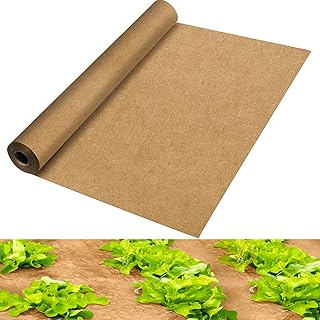
Best overall organic weed barrier choice (natural jute rolls).
Comparing Methods: A Practical Look
If you are trying to decide which route to take, consider your long-term goal. If you want a zero-maintenance permanent path, maybe a stabilized gravel route is better. But for vegetable beds or shrub borders, organic materials always win. Here is how they stack up in real-world application:

| Feature | Organic Weed Mat | Synthetic Fabric |
|---|---|---|
| Longevity | 6-24 Months | 5-10 Years |
| Soil Health | Improves over time | Often degrades |
| Water Permeability | Excellent | Declines over time |
| Cost | Very Low | Moderate to High |
Budget-friendly option (recycled cardboard sheets or local straw mulch).
Who This Is For
This guide is for the conscious gardener who cares more about long-term soil vitality than short-term convenience. It is specifically aimed at those who are ready to transition away from plastic-heavy practices to a more regenerative, no-till approach.
Common Mistakes to Avoid
- Leaving landscape fabric down until it disintegrates into micro-plastics that are impossible to remove.
- Neglecting to layer organic mulch (like wood chips or straw) over your weed barrier, which helps retain moisture and slows down degradation.
- Choosing "eco-friendly" branded fabrics that are still woven with synthetic resins that don't biodegrade.

When we choose to work with nature rather than against it, our gardens don't just survive—they thrive. Ditching the plastic in favor of organic materials might mean a bit more work periodically, but the health of your soil will thank you for years to come.
Frequently Asked Questions
Does organic weed mat really keep weeds out as well as fabric?
It is highly effective, though it works on a different timeline. While it may require replenishment every year or two, it prevents weed germination just as well as plastic without compromising the soil's health.
Will cardboard attract termites to my garden beds?
In most residential gardens, the risk is minimal. Cardboard acts as a food source that breaks down quickly, and the activity it encourages usually supports beneficial soil organisms that keep pests in check.
Is landscape fabric ever the right choice?
It is occasionally useful under permanent, non-planted areas like heavy-duty gravel pathways or driveways where soil biology is not the primary objective. For planting beds, it is rarely the best choice.
Product Comparison
| # | Product | Price | Rating | |
|---|---|---|---|---|
| 1 | |
Product B09MDZ36PS | — | 4.4 out of 5 stars. |
| 2 | |
Product B09MDXPG83 | — | 4.4 out of 5 stars. |
| 3 | |
Product B09MHLDW4N | — | 4.4 out of 5 stars. |