Composting
Best Indoor Compost Bins for Apartments
Honest guide to indoor compost bins for apartments: collection caddies, bokashi fermenters, worm bins, and electric dehydrators-with tradeoffs for small kitchens.
On this page
- Three indoor composting approaches
- Best for most renters: charcoal-filter stainless caddy
- Best for processing all food indoors: bokashi
- Best for plant-based scraps and houseplants: worm bin
- Electric countertop units: worth it?
- Buying criteria checklist
- Where to put each bin type
- Matching bin to your building
- Sample weekly workflow (two-person apartment)
- Climate and building context
Apartment composting is not one product category—it is three different jobs: collecting scraps until you can drop them off, processing waste into soil amendment indoors, or fermenting everything including meat in a sealed bucket. The right bin depends on whether you have a balcony, a community garden drop-off, or only space under the sink.
I have lived with each type in a 650-square-foot kitchen. Below is what held up in daily use—not a ranked list of every product on Amazon.
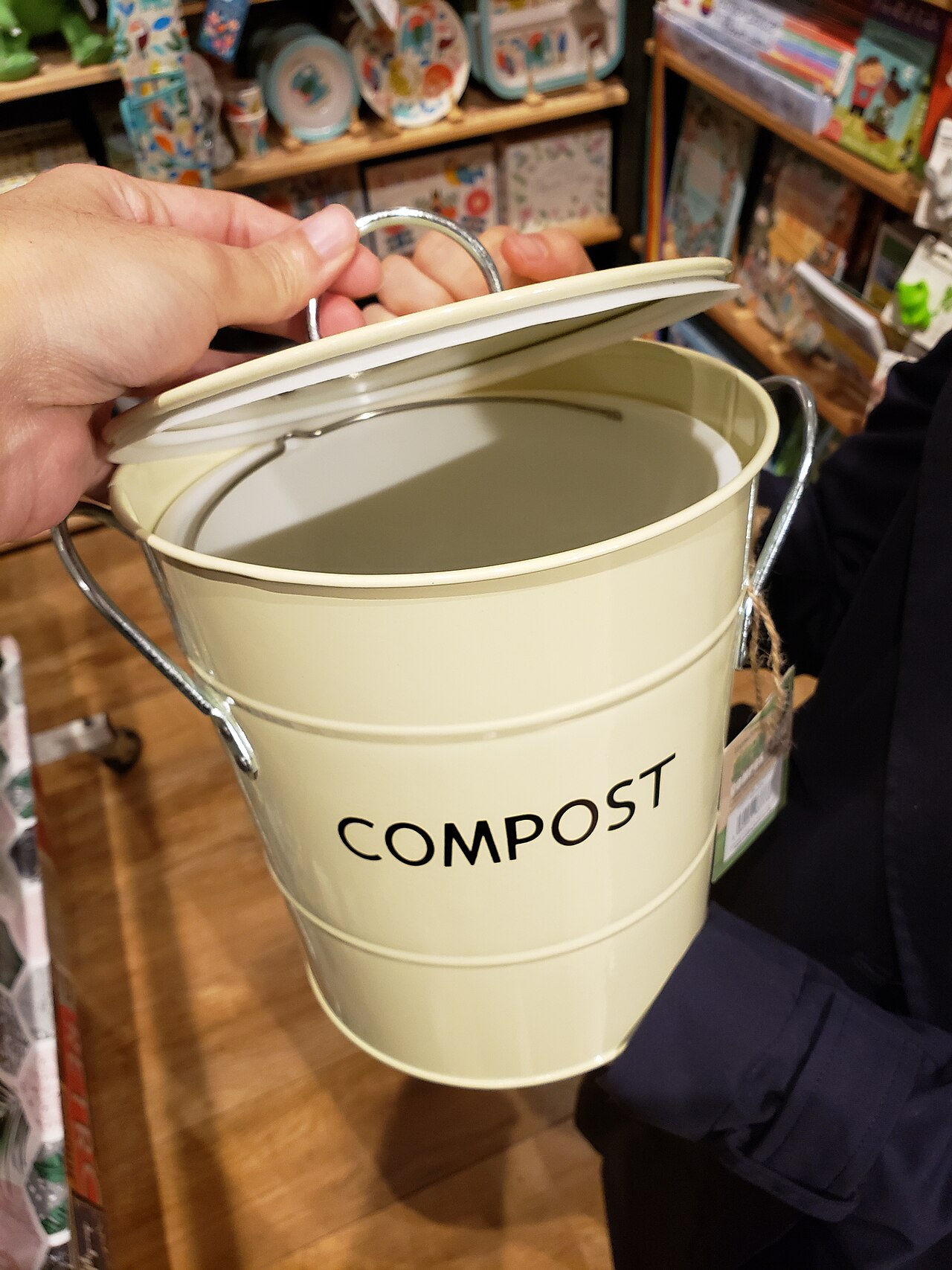
Three indoor composting approaches
| Type | What it does | Odor risk | Output |
|---|---|---|---|
| Charcoal-filter caddy | Stores scraps 3–7 days | Low if sealed | You empty elsewhere |
| Bokashi bucket | Ferments all food waste | Low if drained | Bury or soil-factory |
| Worm bin | Active decomposition | Low if not overfed | Castings for plants |
| Electric dehydrator | Dries and grinds scraps | Very low | Dry amendment (not live compost) |
Best for most renters: charcoal-filter stainless caddy
If your city has green-bin pickup or you haul scraps to a community garden weekly, a 1.3- to 1.75-gallon sealed caddy with a carbon filter is enough. Look for a gasket lid, dishwasher-safe bucket, and replaceable charcoal filters every two to three months.
Empty every three to five days in summer, weekly in winter. Line with paper only if your drop-off site allows it—some commercial composters reject liners.

Affiliate recommendation: charcoal-filter caddy for scrap collection when you compost off-site.
Advertisement
Best for processing all food indoors: bokashi
When you cannot toss meat, cheese, or cooked leftovers into a worm bin, bokashi is the practical choice. A 5-gallon bucket with a spigot lives in a pantry or on a balcony. Drain liquid regularly and bury finished ferment in a soil factory or garden bed. WSU Extension calls bokashi "small-space friendly"—a sealed, anaerobic bucket with minimal odor that suits apartments and even accepts meat and dairy.
Footprint: about the size of a kitchen trash can. Noise and electricity: none. No garden yet? WSU suggests a soil holding bin for balcony gardeners: fill a tote with soil, mix in one part finished bokashi to three parts soil, and rest it three to six weeks before planting.
Best for plant-based scraps and houseplants: worm bin
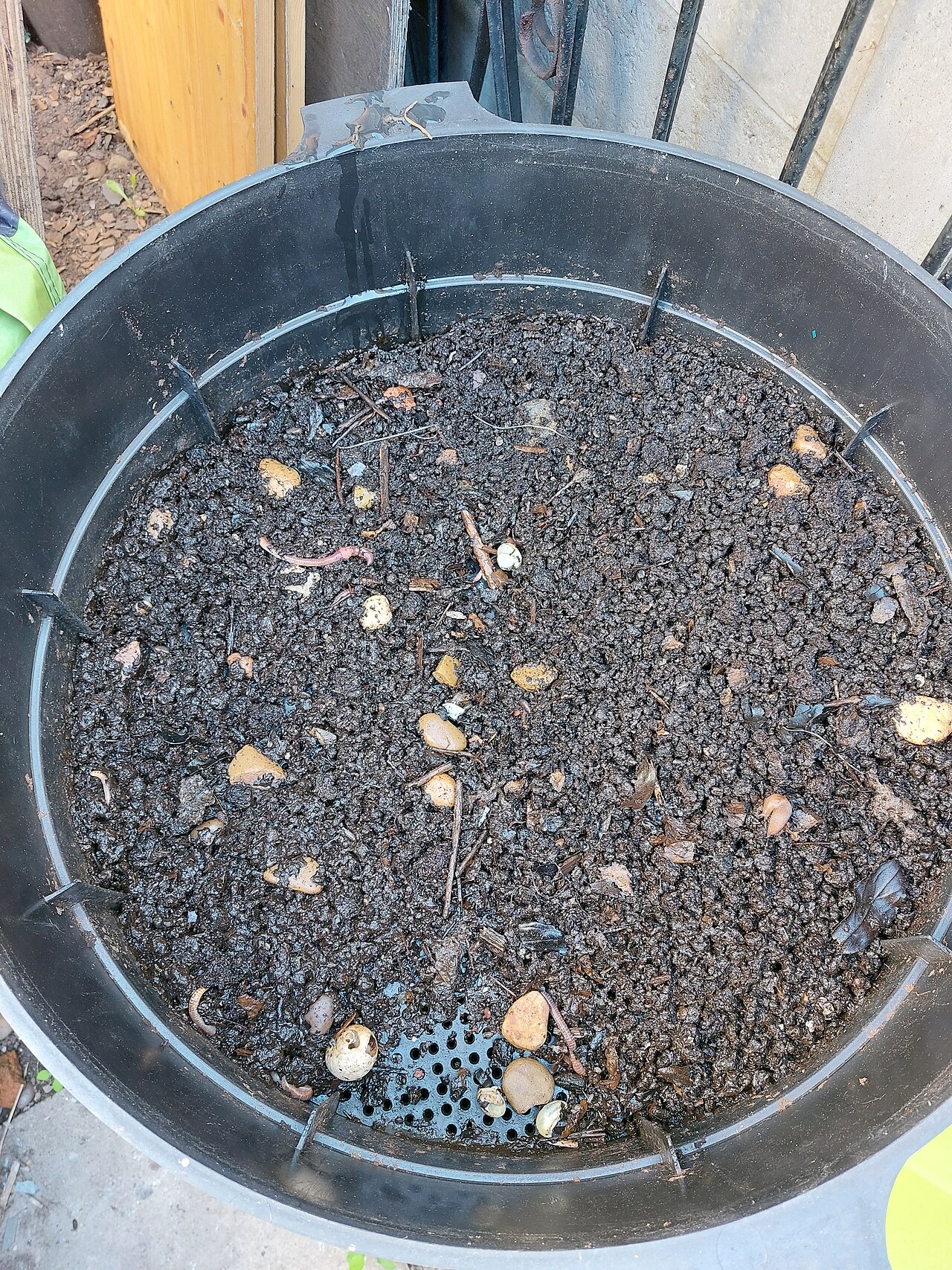
Stackable tray systems fit a closet or balcony corner. You feed thin layers of scraps under bedding and harvest castings from the bottom tray. The EPA confirms indoor worm bins work under a sink, in a closet, or in a basement at 59–77°F—worms survive 32–95°F if they have at least four inches of bedding—and NC State Extension's guidance is equally apartment-friendly: stick to Eisenia fetida, start with about one pound of worms, and keep them near 70°F.
Not ideal if you produce lots of citrus or onion scraps; those go to bokashi or outdoor compost in my setup.
What we measured
Three records from my own apartment setups:
| Setup | What I tracked | My record |
|---|---|---|
| 1.3-gallon steel caddy (under sink) | Odor-free interval between empties | About four days of two-person cooking waste until a saturated charcoal filter caused smell in month four; new filter fixed it |
| Electric dehydrator (borrowed for one month) | Cycle performance | Nightly dinner-prep scraps processed in an 8-hour cycle; avocado pits ran slowly; residue smelled like toasted grain, not rot |
| Frozen scrap bags before drop-off day | Mid-week odor | Eliminated odor entirely when I lived without bokashi—worth the freezer space in a small unit |
Author's own records; single-household observations, not a controlled trial.
Electric countertop units: worth it?
Electric dehydrators (brands like Lomi or FoodCycler) grind and dry scraps into a brown crumb in hours. The output is not traditional compost—it lacks the biological maturity of cured humus—but it is sterile, low-odor, and fine for mixing into soil in small amounts. The EPA is blunt on this category: these appliances do not produce compost, only a dried food-scrap mixture whose output is "not biologically stable" and should be composted or cured before use.
Tradeoffs: upfront cost ($300–$600), power use, and mechanical noise. Good fit if you want zero burial step and have no drop-off option.
Buying criteria checklist
- Seal quality: gasket lid beats loose snap-top for fruit flies.
- Emptying rhythm: match bin volume to how often you can haul or process waste.
- End destination: no point buying a caddy without a compost drop-off plan.
- Floor space: measure under-sink height before ordering a bokashi bucket.
- Landlord rules: some leases restrict worm bins or balcony storage.
Where to put each bin type
- Under-sink caddy: Cool, dark, convenient—replace filters on schedule.
- Bokashi: Pantry or laundry nook; avoid direct sun heating the bucket.
- Worm bin: Balcony (temperate climates), closet, or heated garage—never uninsulated outdoor winter without protection.
- Electric unit: Counter space near an outlet; check noise specs if kitchen is open-plan.
Matching bin to your building
Renters should confirm lease rules about balcony storage and odors. A charcoal caddy plus municipal green bin is the lowest-friction option in cities with curbside organics collection. Bokashi works when you have burial or donation path. Worms need stable indoor temperatures year-round.
HOA communities sometimes restrict visible balcony bins—choose a neutral-colored caddy or indoor-only system.
Sample weekly workflow (two-person apartment)
- Collect scraps in caddy during cooking; empty to bokashi or green bin every 4 days.
- Drain bokashi tea into a jar; dilute for plants or flush if no garden use.
- Sunday: turn worm tray if using worms; add bedding if bedding looks dark and dense.
- Monthly: bury full bokashi bucket in soil factory or haul frozen scraps to community garden.
Climate and building context
Indoor composting barely notices weather, but your building does. In hot climates, avoid pantry corners next to ovens or sunny walls—a warm room accelerates bokashi souring and stresses worm bins near their 85°F upper comfort range. In cold-winter regions, balcony worm bins need insulation wraps or indoor relocation before hard freezes; bokashi buckets tolerate cold but ferment slower, so stretch burial timing accordingly. Humid coastal apartments benefit from sealed systems across the board: gasketed caddies and lidded bokashi outperform open collection where fruit flies are active most of the year. And in older buildings with limited under-sink clearance, measure before buying—most standard cabinets fit a caddy but not a full-size bokashi bucket.
Sources & further reading
- U.S. Environmental Protection Agency — “Composting At Home.” epa.gov
- U.S. Environmental Protection Agency — “Approaches to Composting.” epa.gov
- NC State Extension (Rhonda Sherman) — “Vermicomposting for Households.” composting.ces.ncsu.edu
- Washington State University Kitsap County Extension — “Bokashi Composting.” extension.wsu.edu
Sources verified August 2026.
FAQ
What we do not recommend
- Open countertop bowls without lids—fruit flies within days.
- Oversized outdoor tumblers on balconies without weight/load checks—structural and HOA issues.
- DIY unsealed buckets marketed online as "compost bins" without airflow or drainage design.
Pairing indoor collection with outdoor compost
If you later gain yard access, a caddy habit transfers directly to a backyard pile. Bokashi pre-digest can jump-start cold piles when buried in the center. Worm castings inoculate new heaps with biology—one shovelful replaces commercial starters.
Budget tiers (realistic ranges)
- Under $50: Charcoal-filter caddy for collection only.
- $50–$120: Bokashi bucket kit with bran starter.
- $80–$150: Stackable worm bin with worms.
- $300+: Electric dehydrator/grinder units.
Start at the tier that matches your end destination—no point buying worms if you will travel monthly without a sitter to manage moisture.
Travel and small households
Single-person kitchens produce less volume—a 0.8-gallon caddy may last a full week. For frequent travel, freeze scraps or pause worm feeding before departure so uneaten food does not rot in your absence. Bokashi tolerates travel better if the bucket is nearly full and sealed; drain completely before leaving.
FAQ
Can you compost in an apartment without smell?
Yes, with sealed caddies, drained bokashi, or properly fed worm bins. Smell means something is anaerobic or overdue for emptying.
Do indoor bins attract fruit flies?
Only if lids are loose or scraps sit exposed. Seal gaskets and empty on schedule.
What should not go in a collection caddy?
For drop-off bins: usually no liquids, packaging, or non-compostable liners. Check local rules.
How often should I empty a countertop caddy?
Every 3 to 7 days depending on temperature and volume.
No yard—what do I do with finished compost?
Community gardens, farmers markets, municipal green bins, balcony planters, or bokashi soil factories.
Advertisement