Composting
How to Fix a Smelly Compost Pile
Fix a smelly compost pile fast: match the odor to the cause, add browns or air, and restore aerobic decomposition in 24–48 hours.
On this page
- Step 1: Name the smell
- Step 2: Turn the pile completely
- Step 3: Add the right dry material
- Step 4: Check moisture
- Step 5: Cover and wait 24 hours
- What not to do
- Prevent smells from returning
- Seasonal smell triggers
- Bin vs. open pile: different fixes
- Is finished-but-smelly compost usable?
- Maintenance rhythm to stay odor-free
- Tools that make odor recovery faster
- When to escalate beyond DIY fixes
- Odor fixes in wet vs. dry climates
- FAQ
A healthy compost pile smells like damp forest floor—not rotten eggs, ammonia, or garbage. If neighbors can tell you compost before they see it, the pile has gone anaerobic, too wet, or overloaded with nitrogen. This guide gives you a smell-first repair sequence you can run in an afternoon.
For broader pile problems (cold heaps, pests, slow breakdown), see the full compost troubleshooting guide.
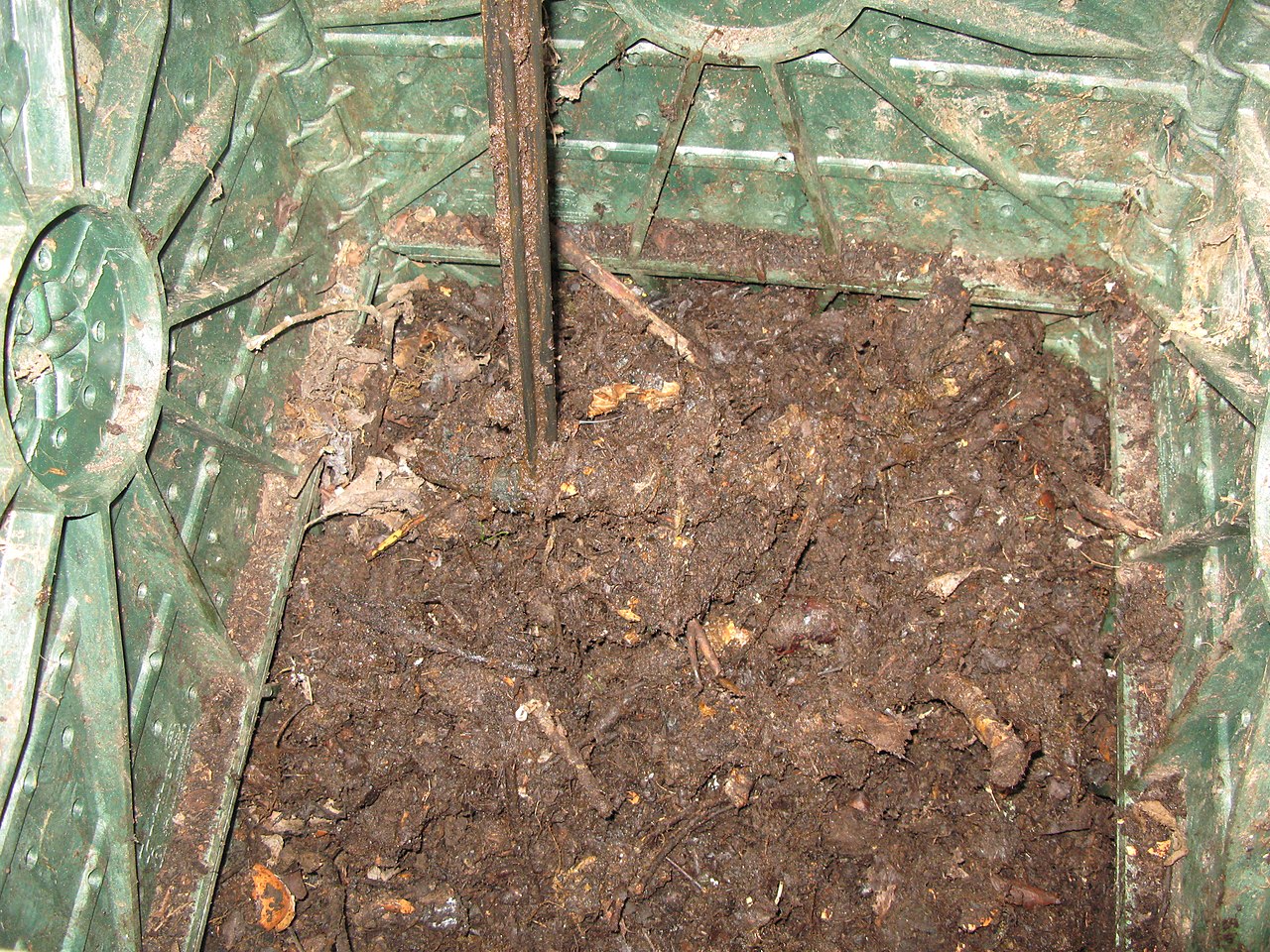
Step 1: Name the smell
| Odor | Meaning | Fix priority |
|---|---|---|
| Rotten eggs / sour | No oxygen; likely wet and compacted | Turn + coarse browns (straw, twigs) |
| Ammonia / cat urine | Too much nitrogen (greens) | Dry leaves, shredded cardboard |
| Putrid garbage | Meat, dairy, or fats in pile | Remove offenders; reset with browns |
This mapping matches what university and agency troubleshooters publish. Cornell University's composting troubleshooter lists wet, rotten-egg smells under "not enough air" or "too much nitrogen," and K-State Extension's guide distills it further: ammonia means too many greens, while rotten odors mean the pile has gone anaerobic—both fixed with browns and turning.
Step 2: Turn the pile completely
Move outer cool material to the center and break up clumps with a fork. Aeration is the fastest way to shut down odor-producing anaerobic bacteria—in EPA's words, turning the pile, blowing air through pipes or vents, and adding bulking agents such as wood chips and dry leaves all help increase aeration. In a 3-by-3-foot bin, plan on 15 to 20 minutes of thorough turning.
Field note: A neighbor's pile reeked after they dumped an entire mower bag of wet grass in one layer. Forking it out, mixing with two wheelbarrows of dry leaves, and restacking eliminated the rotten-egg smell before the next morning.
Advertisement
Step 3: Add the right dry material
For ammonia smells, use absorbent browns: shredded cardboard, dry leaves, or straw. Aim for roughly three times the volume of the smelly green section you found. Layer and mix—not just a dry cap on top.
For soggy anaerobic piles, add coarse material that creates air gaps. Fine sawdust can mat and make things worse; prefer straw or chopped twigs under ½ inch. The underlying principle is one extension services repeat constantly: a mismatched carbon-to-nitrogen ratio leads to odors, pests, or incomplete decomposition, and too much incoming water pushes a pile into low-oxygen territory—so every fix restores carbon and air first.
Step 4: Check moisture
Grab a handful from the center after turning. It should feel like a wrung-out sponge: damp, not dripping. If water streams out, leave the pile spread out for an hour on a dry day, then rebuild. If it crumbles dry, mist lightly while turning.
Step 5: Cover and wait 24 hours
After fixing balance, cover with a breathable tarp only if more rain is coming. Recheck smell the next day. Most aerobic recovery happens within 12 to 24 hours once oxygen and carbon are corrected.
What we measured
I keep a 5-gallon demo bucket to show odor recovery on a scale anyone can replicate. One over-watering incident, logged:
| Check | Core temperature | Smell |
|---|---|---|
| Healthy bucket, before the mistake | 125°F | Neutral, earthy |
| After accidental over-watering | 88°F | Sour edge |
| One day after mixing in one quart of dry shredded paper and drilling air holes | Climbing back | Back to neutral |
Author's own records; single-pile observation, not a controlled trial.
What not to do
- Baking soda or lime: Masks odor temporarily and can disrupt pH and nitrogen retention.
- Commercial "deodorizer" sprays: They do not fix anaerobic conditions.
- Adding more kitchen scraps before the smell clears—wait until the pile smells earthy again.
The EPA's prevention guidance is nearly identical: maintain roughly two to three parts carbon-rich browns for every one part nitrogen-rich greens, and always ensure food scraps are covered by four to eight inches of dry leaves or other browns so odors never get started.

Affiliate recommendation: corkscrew aerator for deep oxygen channels without full pile teardown.
Prevent smells from returning
- Bury every kitchen addition under 4 to 6 inches of browns.
- Never add meat, dairy, or cooking oil to an open pile.
- Keep a dry leaf or cardboard stash next to the bin.
- Turn weekly during active composting seasons.
Seasonal smell triggers
Odors often spike after predictable events. Planning for them prevents emergency repairs.
- Spring grass dumps: Fresh clippings mat and go anaerobic within 48 hours. Mix each mower bag with an equal volume of dry leaves before adding.
- Fall leaf overload: Too much carbon can stall heat but rarely smells—unless rain saturates a dense leaf pack. Fluff with a fork.
- Holiday food volume: Large additions of fruit and vegetable prep need extra cardboard, not just a thin cover.
Bin vs. open pile: different fixes
Plastic stationary bins often lack bottom drainage. If liquid pools at the base, pull the bin off the heap, fork in dry material, and drill extra side holes if the manufacturer allows.
Open piles recover faster with sunlight and wind but need wider brown mixing to avoid surface slime after rain.
Tumblers trap moisture—add dry shredded paper when you smell sour notes on opening the lid.
Is finished-but-smelly compost usable?
If texture is crumbly but a sour edge remains, the pile may be "done" physically but still biologically immature. Spread it thin on a tarp for two weeks, turn once, and smell again. Earthy odor should replace sour or ammonia notes before applying to root zones.
Never apply actively anaerobic material around seedlings or in containers—it can harm roots and seedlings through organic acids and low oxygen demand in soil pores.
Maintenance rhythm to stay odor-free
- Keep a 5-gallon bucket of dry leaves or shredded paper next to the bin.
- Bury every kitchen deposit under 4 inches of browns the same day.
- Turn or aerate weekly during spring and summer active phases.
- Drain or fork wet corners after heavy rain within 24 hours.
- Log additions mentally: if you added three buckets of greens this week, plan three buckets of browns before the weekend.
Field note: Since adopting a "browns bucket" beside my bin in 2024, odor callouts from my household dropped to zero—even during a record wet February.
Tools that make odor recovery faster
You do not need expensive gear, but two items speed recovery:
- Compost fork or broad pitchfork for lifting wet layers without compressing them further.
- Shredded cardboard stash—flatten delivery boxes weekly so you always have dry carbon ready.
Aerator tools help when the pile is deep in a stationary bin and hard to fork out entirely. Punch vertical channels, then add browns at the top and water lightly only if dry.
When to escalate beyond DIY fixes
Call it a reset if smell persists after two full turn-and-brown cycles, if you find maggots from meat scraps, or if rodents have nested in the base. Remove the top 12 inches of contaminated material, line the bin with hardware cloth, and rebuild from browns only before reintroducing kitchen waste slowly.
Persistent issues after a clean rebuild usually mean the bin location stays too wet (downspout drip, low spot) or neighbors are adding inappropriate materials to a shared heap—fix the environment, not just the pile.
Odor fixes in wet vs. dry climates
Your region decides which smells you will fight most. In rainy climates (Gulf Coast, Pacific Northwest, much of the UK), anaerobic rotten-egg odors dominate because rain strips oxygen faster than turning replaces it—keep piles under cover, build on a twig base for drainage, and lean on coarse browns like straw rather than paper that clumps when damp. In arid regions (Southwest, interior West), ammonia from over-concentrated greens is the more common call: with so little ambient moisture, nitrogen volatilizes sharply before piles go soggy, so keep a water can beside the leaf stash. Humid-summer continental gardens get both, alternating by season—wet-smell protocol in spring and fall, dry-and-ammonia protocol in July and August.
If your pile sits against a fence line shared with neighbors, run the smell-first checklist within 24 hours of any heavy rain or big green addition; a one-day response almost always prevents the multi-day complaints that follow a full anaerobic collapse.
Sources & further reading
- U.S. Environmental Protection Agency — “Composting At Home.” epa.gov
- U.S. Environmental Protection Agency — “Approaches to Composting.” epa.gov
- Cornell Waste Management Institute, Cornell University — “Troubleshooting Composting Problems.” compost.css.cornell.edu
- K-State Research and Extension — “MF3371 Composting Troubleshooting Guide.” bookstore.ksre.ksu.edu
Sources verified August 2026.
FAQ
Can I use baking soda to stop compost odor?
Not recommended for whole piles. Sodium can harm plants when compost is applied. Fix the carbon, moisture, and air balance instead.
Should I cover a smelly pile when it rains?
Yes—prevent additional saturation while you correct the existing moisture problem.
How long until the smell goes away?
Usually 12 to 48 hours after thorough turning and adding browns, if animal products are not involved.
Is smelly compost safe for vegetables?
Not while actively anaerobic. Wait until finished compost is earthy and cool.
Does lime fix smelly compost?
It can release more ammonia. Use dry carbon materials and aeration instead.