Composting
Compost Troubleshooting Guide: Fix Odor, Heat, and Pests
Hands-on compost troubleshooting for smelly, cold, wet, or pest-ridden piles. Diagnose the problem, apply the fix, and get decomposition back on track.
On this page
- Quick diagnosis chart
- Smelly compost: identify the odor first
- Cold pile: why heat stalls
- Pests and flies
- Restarting a stalled pile
- When to stop troubleshooting and start over
- Too wet or too dry: moisture fixes
- Slow decomposition: material size and balance
- Tumbler-specific issues
- Climate and season: why the same pile fails differently
- FAQ
Most compost failures come down to three variables: too much nitrogen, too little oxygen, or the wrong moisture level. This guide walks you through diagnosing what went wrong with your pile and fixing it with specific steps—not vague advice to "add more browns" without context.
Use it when your heap smells bad, will not heat up, attracts flies or rodents, or sits unchanged for months. For odor-only problems, also see how to fix a smelly compost pile.
Quick diagnosis chart
| Symptom | Likely cause | First fix |
|---|---|---|
| Rotten-egg or sour smell | Anaerobic (wet/compact) | Turn pile; mix in dry shredded cardboard or straw |
| Ammonia smell | Too many greens | Add 2–3× volume of browns; turn thoroughly |
| Pile cold after 2+ weeks | Too small, too dry, or low nitrogen | Build to 3×3×3 ft; moisten; add coffee grounds or grass clippings |
| Fruit flies at surface | Exposed kitchen scraps | Bury scraps 6 in. deep; cap with 4 in. of browns |
| Rodents | Meat/dairy or exposed food | Remove animal products; use hardware cloth base |
Smelly compost: identify the odor first
Your nose tells you which imbalance to correct:
- Rotten eggs / sewage: Oxygen is gone. The center is likely waterlogged or compacted. Turn the entire pile inside out and work in coarse browns (straw, twigs) to reopen air channels.
- Sharp ammonia: Excess nitrogen. For every shovelful of wet greens visible, add two shovelfuls of dry leaves or shredded paper and mix.
- Vinegar / fermentation: Often from too much fruit without enough carbon. Same fix as ammonia—more browns, more air. Cornell University's Waste Management Institute troubleshooting chart pairs wet, rotten-egg smells with compaction and lack of air (or excess nitrogen), while K-State Research and Extension identifies ammonia odor specifically as too much nitrogen—fixed by adding high-carbon material such as straw or wood chips.
The EPA's own troubleshooting guidance says much the same: a bad odor usually means the pile is too wet or needs air circulation, so add dry browns and turn it; a pile that will not heat up needs more greens mixed in.
Advertisement
Cold pile: why heat stalls
Hot composting needs mass, moisture, nitrogen, and air. A pile smaller than 3 feet in any dimension loses heat fast. If size is fine, check these:
- Moisture: Squeeze test—one or two drops is ideal; none means too dry; streaming means too wet.
- Nitrogen: Mostly leaves and wood chips? Add a thin layer of coffee grounds or fresh grass (mixed, not clumped).
- Turning: A crust forms on top that insulates poorly but blocks oxygen below. Turn weekly during active phases.
A compost thermometer removes guesswork. Probe the center after turning; 130°F to 150°F indicates active decomposition in warm weather.

Affiliate recommendation: 20-inch probe for checking core temperature without guessing.
Pests and flies
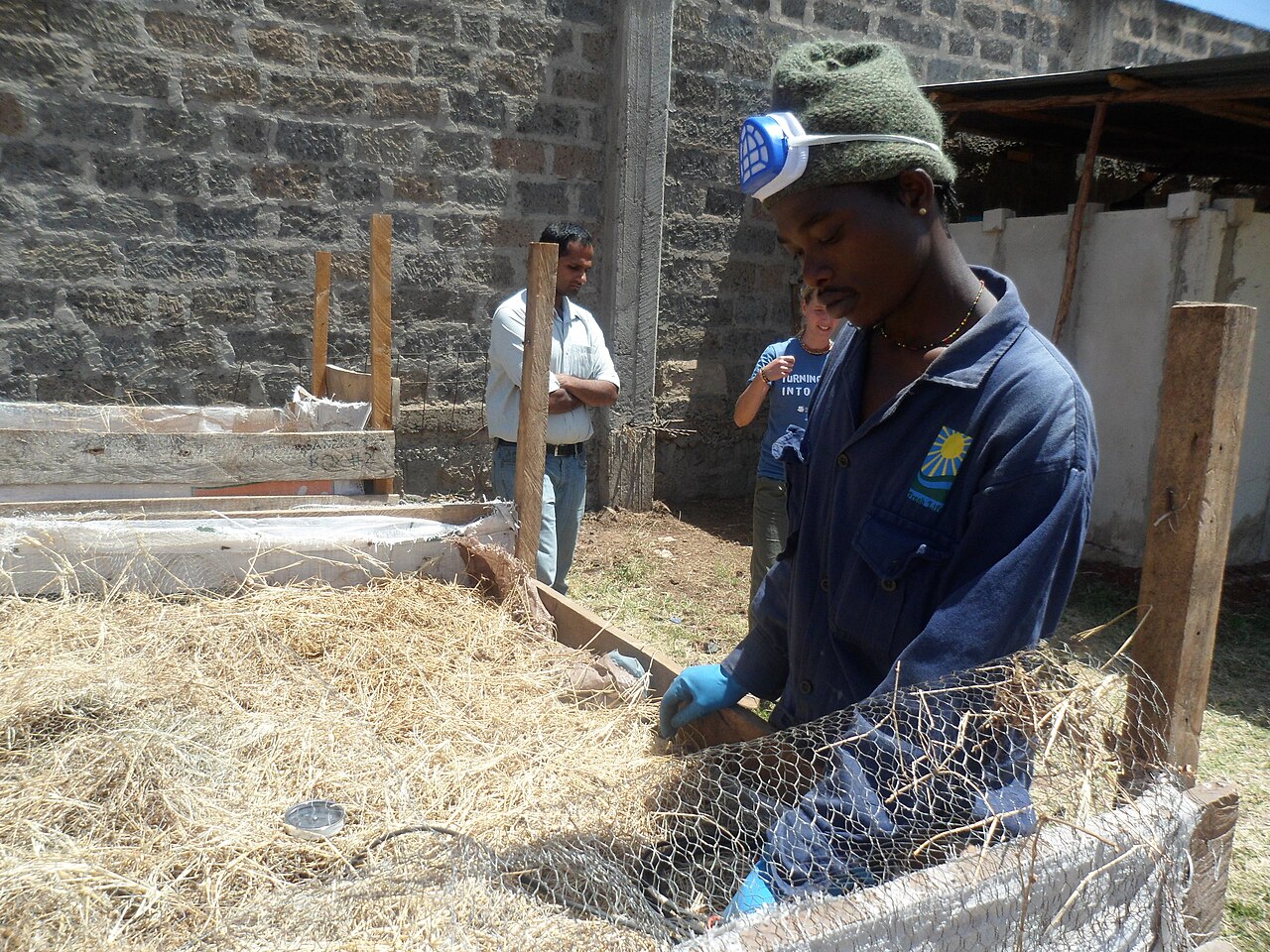
Compost should not attract rats if you follow plant-based inputs and bury food. Line open-bottom bins with ¼-inch hardware cloth. Never add meat, dairy, or oily cooked food to a standard pile. For fruit flies, bury scraps and keep a dry brown cap on the surface at all times.
Restarting a stalled pile
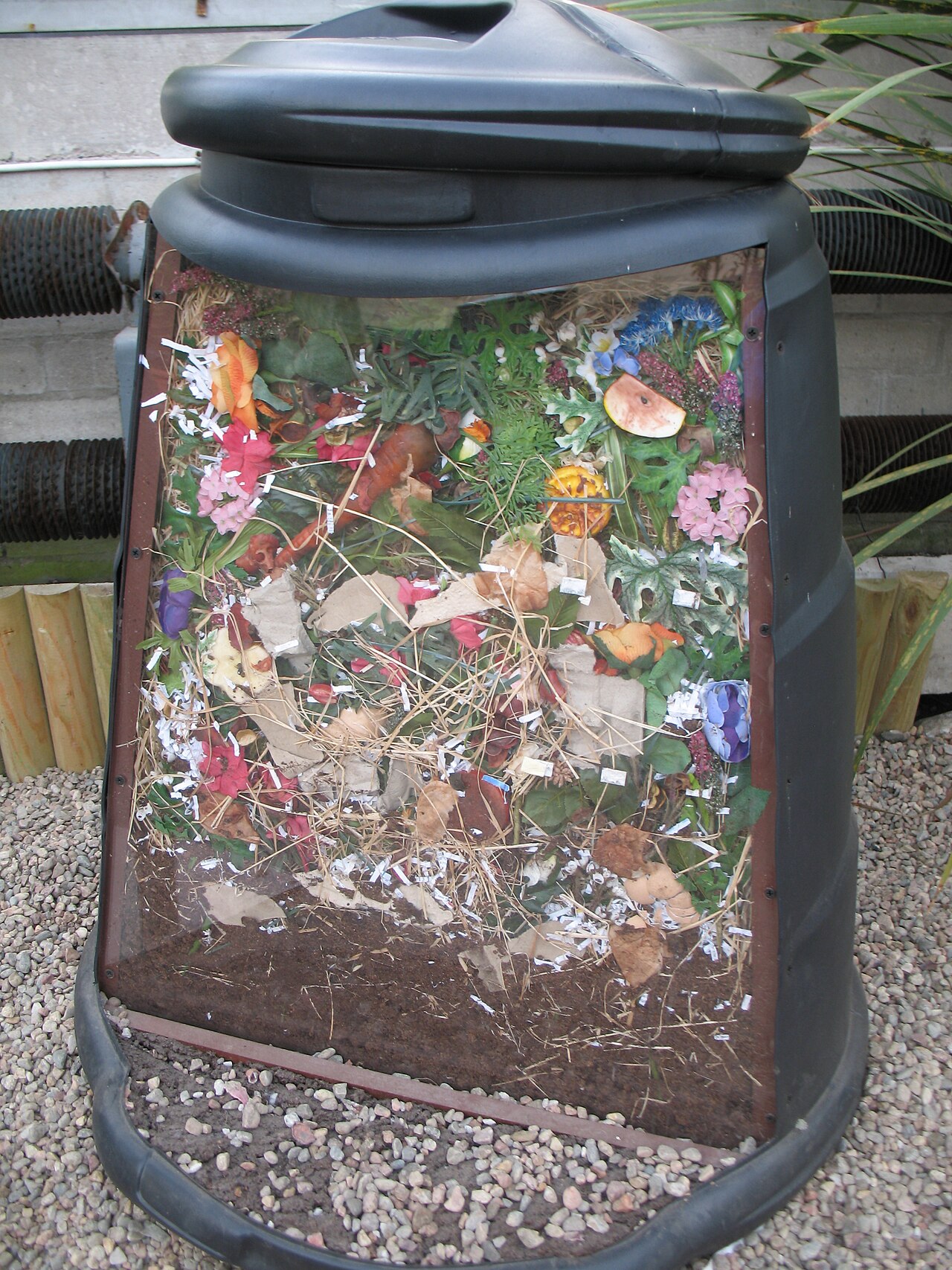
- Spread or fork out the pile to assess moisture and layering.
- Correct moisture (dry = sprinkle while turning; wet = add browns and air).
- Rebuild to at least 3 feet tall, alternating thin green and thick brown layers.
- Cover with straw or a breathable tarp if rain is forecast.
- Turn again in 7 days and check core temperature.
When to stop troubleshooting and start over
If the pile contains meat, large amounts of grease, or persistent rat nesting, remove contaminated material, reset the bin with fresh browns, and commit to plant-based inputs only. Sometimes a clean restart is faster than rescuing a biologically compromised heap.
Too wet or too dry: moisture fixes
Moisture is the variable beginners misread most often. A pile can look dry on top while the core is soggy from kitchen scraps or rain. The Minnesota Pollution Control Agency's diagnostic guide uses a simple fist test: squeeze a handful from the core, and if water drips or runs out of your hand, the pile is too wet.
Too wet
- Fork the pile out in a sunny spot and let it sit for half a day to surface-dry.
- Mix in dry shredded cardboard at roughly 1:1 with wet material by volume.
- Rebuild with a base layer of twigs for drainage before restacking.
- Cover only the top with a tarp during storms—not the sides, which need airflow.
Too dry
- Water in thin layers while turning—do not dump a hose into the center once.
- Add moisture-rich greens (melon rinds, fresh grass) mixed with dry browns.
- In summer, check weekly; surface crust often hides dry pockets below.
What we measured
I keep notes on every recovery I run. Three recent ones, with the numbers as recorded at the time:
| Pile | Problem | Action taken | Result |
|---|---|---|---|
| Open 4-ft pile after a week of daily rain | Waterlogged—water ran freely from a squeezed handful | Forked out flat, mixed in three bags of dry leaves, restacked | Smell cleared within 18 hours; core climbed 75°F to 118°F over three days |
| Client's tumbler during an August drought | Dried to dust after two weeks without rain | Two liters of water added across three turn cycles | Core temperature above 105°F within five days |
| Stalled wire-bin pile in March | No movement for six weeks | Rebuilt with one 5-gallon bucket of coffee grounds and two wheelbarrows of shredded fall leaves | Visible steam on the third morning after turning—first sign of life since January |
Author's own records; single-pile observations, not a controlled trial.
Slow decomposition: material size and balance
If the pile is warm but unchanged after a month, particle size or carbon quality is usually the bottleneck.
- Chop inputs to 1–2 inches. Whole corn cobs and thick stems can persist a full season.
- Balance woody browns with nitrogen. Pure leaf piles need coffee grounds or grass to sustain heat.
- Avoid anaerobic layers of grass clippings thicker than 2 inches without mixing.
Screen finished compost through ½-inch hardware cloth. Return chunky pieces to a new active pile rather than forcing immature material into garden beds.
Tumbler-specific issues
Closed tumblers hold moisture well but can go anaerobic if overfilled or not turned often enough.
- Fill only to 75% capacity so material tumbles freely.
- Add shredded paper or leaves when scraps look wet and clumped.
- Spin 3–5 full rotations after each addition.
- Cure finished material in a bucket for two weeks before using—tumbler output can be biologically immature immediately after dumping.
Climate and season: why the same pile fails differently
Where you garden changes which failure shows up first. In humid climates (Southeast, Pacific Northwest), wet-anaerobic symptoms dominate—rotten smells after storm sequences, slugs nesting in open bins, and browns that are never dry when you need them, so stockpile shredded cardboard under cover year-round. In arid climates (Southwest, high plains), the opposite: piles stall from dryness, ammonia rarely appears, and surface material desiccates into a waterproof crust that sheds irrigation water—break the crust while watering. Cold-climate composters see "false stalls" in winter: the core may simply be frozen rather than biologically dead; probe the center on a day above 40°F before declaring failure. And in hot climates, piles can run too fast through moisture, so check water weekly from June through September even if nothing smells wrong.
Seasonal timing matters for diagnosis, too. A cold pile in November is usually just weather; the same reading in June means size, nitrogen, or moisture is off. Give any corrective action at least one full warm week before judging it.
Sources & further reading
- U.S. Environmental Protection Agency — “Composting At Home.” epa.gov
- Cornell Waste Management Institute, Cornell University — “Troubleshooting Composting Problems.” compost.css.cornell.edu
- K-State Research and Extension — “MF3371 Composting Troubleshooting Guide.” bookstore.ksre.ksu.edu
- Minnesota Pollution Control Agency — “Diagnosing common backyard composting problems.” pca.state.mn.us
Sources verified August 2026.
FAQ
Why is my compost pile attracting fruit flies?
Exposed kitchen waste on the surface ferments and draws flies. Bury scraps at least 6 inches deep and cover with dry browns.
Can I compost citrus peels and onions?
Yes, in moderation. Chop peels small and balance with browns. See our citrus in compost guide.
How do I know compost is finished?
Dark, crumbly texture, earthy smell, and no recognizable food scraps. The pile should match outdoor air temperature.
Are oak leaves and pine needles safe?
Yes as browns, but they break down slowly. Shred them and limit pine needles to roughly 10% of pile volume.
Why does my compost smell like ammonia?
Too much nitrogen. Mix in dry carbon materials immediately and turn to incorporate air.