Water-wise planting
Drought-Tolerant Plants for Sustainable Landscaping
Choose drought-tolerant plants for your climate zone, establish them with the right watering schedule, and design hydrozones that cut outdoor water use without sacrificing curb appeal.
On this page
Replacing thirsty turf with drought-tolerant plants is one of the most effective ways to lower outdoor water use — but only if you choose species suited to your soil, establish them correctly, and group plants by water need. This guide is for homeowners and renters with yard space who want a landscape that survives dry summers without daily sprinklers.
Drought-tolerant plants can maintain growth through dry periods once established. They are not zero-water plants: every new planting needs a full establishment period, typically 12 to 24 months of deep, infrequent watering before you can rely on rainfall alone in most climates.
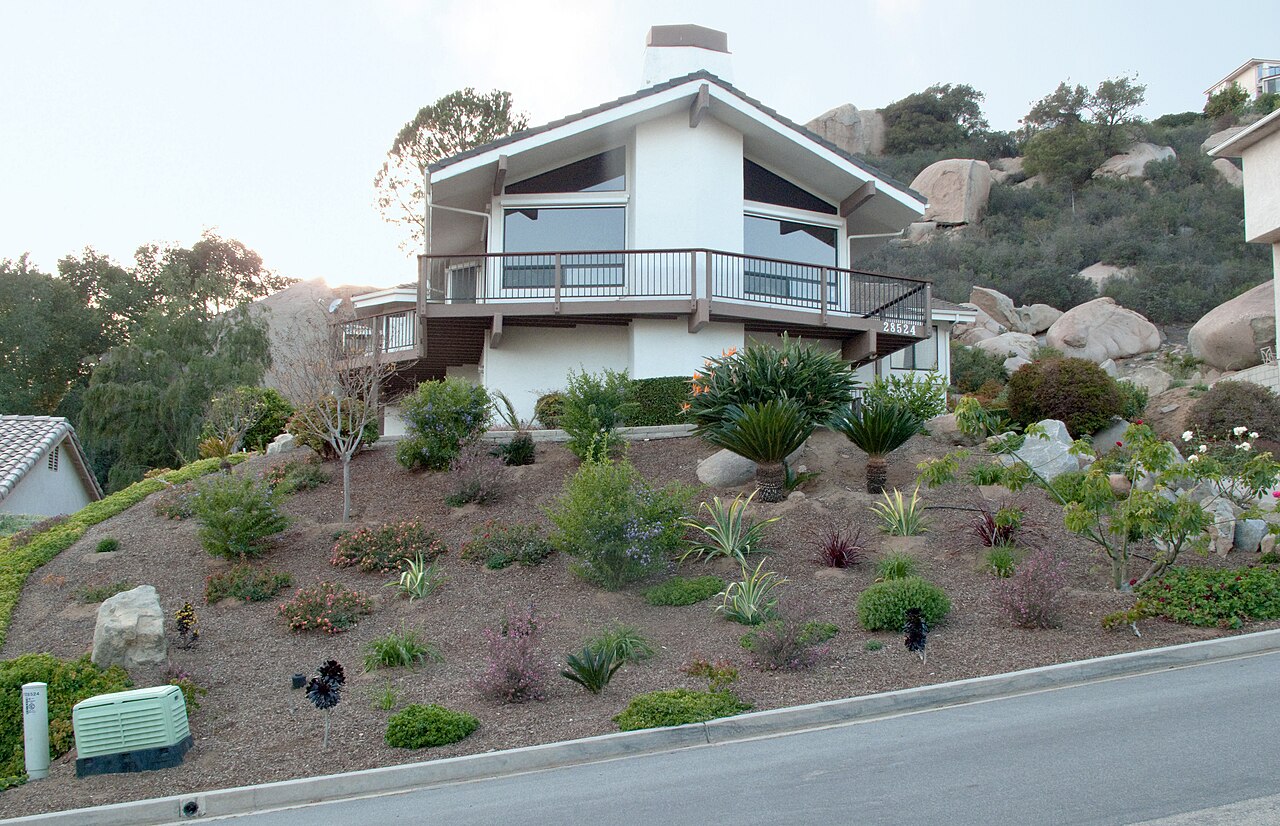
The stakes go beyond one yard. According to EPA WaterSense, residential landscape irrigation drives nearly 8 billion gallons of daily outdoor water use nationwide — and the average U.S. household uses more water outdoors than in showers and laundry combined. Converting even a fraction of that turf to well-chosen dry-garden planting moves the needle.
Regional note: A plant labeled drought-tolerant in Arizona may rot in a wet Pacific Northwest winter. Match plants to your USDA zone and your wet-season rainfall. In the Desert Southwest, focus on drainage and afternoon shade for young plants. In the Southeast, prioritize airflow and avoid planting succulents in low spots that hold water after storms.
Reliable Plant Choices by Layer
Build a landscape in three layers — groundcover, perennial or shrub, and structural accent — so bare soil stays covered and evaporation drops.
Perennials
- Purple coneflower (Echinacea purpurea): Deep taproot, pollinator-friendly. Zones 3–9. Tolerates clay if drainage is adequate.
- Yarrow (Achillea millefolium): Fine foliage reduces transpiration. Spreads moderately. Cut spent blooms to prevent self-seeding if desired.
- Black-eyed Susan (Rudbeckia hirta): Long bloom period in zones 3–9. Works in average soil; does not need rich fertilizer.
Shrubs and Sub-Shrubs
- Russian sage (Salvia yangii): Silvery foliage, lavender blooms. Thrives in poor, sandy soil. Zones 5–9.
- Lavender (Lavandula spp.): Needs sharp drainage and full sun. English lavender struggles in humid Southeast summers; Spanish lavender often performs better in zones 8–10.
- Manzanita (Arctostaphylos spp.): Excellent for California and Oregon dry gardens. Evergreen structure, minimal summer water once rooted.
Ornamental Grasses
- Blue fescue (Festuca glauca): Low mounding accent. Zones 4–8.
- Little bluestem (Schizachyrium scoparium): Native prairie grass with fall color. Deep roots. Zones 3–9.
Regional Standouts by U.S. Region
Zone ratings describe cold tolerance, not rainfall timing — a "drought-tolerant" tag from one region can mislead in another. These are dependable starting points matched to each region's actual dry season:
- Pacific Northwest: Wet winters kill more dry-garden plants than summer drought does. Kinnikinnick (Arctostaphylos uva-ursi) and Oregon sunshine (Eriophyllum lanatum) shrug off a soggy January followed by a bone-dry August, especially on raised or sloped ground.
- Desert Southwest: Red yucca (Hesperaloe parviflora), damianita (Chrysactinia mexicana), and desert marigold handle monsoon humidity if drainage is sharp. Give first-year transplants afternoon shade.
- Great Plains: Little bluestem, purple prairie clover (Dalea purpurea), and blanket flower evolved with summer storms followed by winter desiccation. They want full sun and no midsummer fertilizer.
- Southeast: Humidity is the hidden stress. Purple muhly grass (Muhlenbergia capillaris) and oakleaf hydrangea (once established) tolerate dry spells without rotting in August air. Avoid dense succulent carpets that hold moisture against leaves.
- Northeast: Butterfly weed (Asclepias tuberosa) and wild bergamot (Monarda fistulosa, the species rather than mildew-prone eastern selections) perform in lean, sandy or gravelly soils where water never ponds.
Advertisement
Establishment Watering Schedule
New plants fail when gardeners either drown them with daily sprinkles or abandon them too soon. As a baseline, EPA WaterSense pegs a typical landscape's need at about one inch of water per week including rainfall, and warns against midday watering when evaporation peaks — deep soaks in early morning deliver more of that inch to roots. Use this framework:
| Phase | Timing | Method | Goal |
|---|---|---|---|
| Weeks 1–4 | Every 2–3 days | Drip or slow hose at root zone | Keep root ball moist, not soggy |
| Months 2–6 | Once per week | Deep soak 30–60 minutes | Encourage roots to follow water downward |
| Months 7–18 | Every 10–14 days in dry spells | Same deep soak | Test soil 4 inches down before watering |
| Year 2+ | As needed | Supplement only during extended drought | Plants should show slight wilt before you irrigate |
What we measured
Last spring I converted a 12-by-20-foot parking strip in Portland (USDA Zone 8b) from sod to yarrow, sedum, and creeping thyme, running the bed on its own drip valve. I read the water meter on that zone through the first full season and the following spring:
| Period | Irrigation Frequency | Notes |
|---|---|---|
| June (planting month) | Drip twice weekly | New plugs, full sun |
| July–September | Drip once weekly | Tapered as roots took hold |
| Following May | Twice total in a three-week dry spell | Only supplemental water needed |
| Season total vs. former lawn | Roughly 70 percent less irrigation | Compared at the same zone's valve meter |
Author's own records; single-plot observation, not a controlled trial.
Garden trial notes
The taper worked because each phase had an exit test: I checked soil four inches down before every scheduled soak and only irrigated when the test came back dry. Two decisions mattered more than any product. Grouping the whole strip on one low-water valve meant nothing thirstier shared the schedule, and keeping mulch topped up meant June's watering reached roots instead of evaporating off bare soil. Your numbers will differ with soil and exposure, but the shape of the curve — heavy early, light late — should look similar.
Design a Low-Water Yard in Five Steps
- Audit sun and drainage. Walk the yard at 9 a.m., noon, and 4 p.m. Mark soggy zones and baking-hot south walls.
- Hydrozoning: Put thirstier plants (vegetables, new trees) near the house or rain barrels. Reserve distant beds for the lowest-water species on a separate valve.
- Amend for drainage, not richness. Mix 2 to 3 inches of compost into the top 8 inches of soil. Add pumice or coarse sand in clay. Most drought plants prefer lean soil.
- Install drip irrigation. Overhead sprinklers lose water to evaporation and encourage foliar disease. Colorado State University Extension rates drip above 90 percent efficiency versus 50 to 70 percent for sprinklers — though any system, including drip, wastes water if the schedule runs longer than the soil needs.
- Mulch 2 to 3 inches deep. Wood chips for perennials; gravel for desert plantings. Refresh mulch annually. Vegetable beds that need a thicker organic cap should use lasagna gardening and deep mulch instead of gravel.
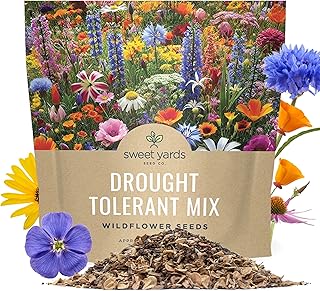
Affiliate recommendation: a simple moisture probe helps you check 4 to 6 inches down before watering during establishment — finger tests are unreliable in amended soil.
Plant Reference Table
| Species | Type | Zones | Water After Establishment | Soil Notes |
|---|---|---|---|---|
| Purple coneflower | Perennial | 3–9 | Low | Well-drained loam |
| Russian sage | Shrub | 5–9 | Very low | Sandy, poor soil OK |
| Blue fescue | Grass | 4–8 | Low | Dry, rocky |
| Lavender | Sub-shrub | 5–9 | Low | Alkaline, fast drainage required |
| Little bluestem | Grass | 3–9 | Very low | Average to dry |
Common Mistakes
- Overwatering after planting: Daily light sprinkles keep roots shallow. Water deeply and less often.
- Skipping drainage fixes: Lavender and agave in unamended clay will develop root rot within one wet winter.
- Mixing water needs on one valve: Your drought bed and vegetable garden need separate schedules. See native vs adaptive plant selection for pairing ideas.
- Expecting instant curb appeal: Many drought-tolerant perennials look sparse year one and fill in by year three.
Sources & further reading
- US EPA WaterSense — “Outdoor.” epa.gov
- US EPA WaterSense — “Landscaping Tips.” epa.gov
- Colorado State University Extension — “Drip Irrigation for Home Gardens.” extension.colostate.edu
- US EPA WaterSense — “Watering Tips.” epa.gov
Sources verified August 2026.
Frequently Asked Questions
How long do drought-tolerant plants need supplemental water after planting?
Typically 12 to 24 months of deep, scheduled watering. Shrubs and trees on the larger end of that range; small perennials may settle in closer to 12 months in mild climates.
Can drought-tolerant plants survive in clay soil?
Yes, with amended drainage or mounded planting. Without drainage improvements, dry-climate plants often die from winter wet feet rather than summer drought.
What is hydrozoning?
Grouping plants by water need on separate irrigation zones. It is the single most important design step for mixed landscapes.
Are native plants always more drought-tolerant than non-natives?
Locally native plants usually match your rainfall pattern well, but some adaptive non-natives also perform in disturbed urban soils. Use both strategically.
How much mulch should I use?
2 to 3 inches, pulled back from stems. Mulch cuts evaporation and suppresses weeds that compete for moisture.
Advertisement