Water systems
How to Build a Greywater System for Gardens
Step-by-step laundry-to-landscape greywater for gardens: materials, mulch basins, plant selection, detergent rules, and safety and legal requirements by region.
On this page
A washing machine can send 15 to 40 gallons of water per load to the sewer — water that could irrigate fruit trees and shrubs instead. A laundry-to-landscape (L2L) greywater system diverts that discharge through a valve and pipe network into mulch basins in your yard. It is the most accessible DIY greywater project for homeowners with an exterior wall near the washer.
This guide covers materials, installation steps, plant selection, and maintenance. It also covers safety and legal requirements you must verify before cutting into any plumbing.
Safety and legal notice — read before installing:
- Check local codes first. Greywater rules vary by state, county, and city. California's Plumbing Code allows qualifying L2L systems without a permit in many cases; Arizona, Texas, and Oregon have their own frameworks. Many Eastern and Midwestern municipalities require permits for any greywater or prohibit DIY installation entirely. Call your building department or environmental health office before starting.
- Never store greywater. Water held more than 24 hours turns anaerobic and can harbor pathogens. Greywater systems must discharge directly into soil — no barrels, tanks, or ponds.
- Keep greywater away from humans and pets. No spray irrigation, no surface pooling, no discharge within setback distances from wells, property lines, or waterways (commonly 100 feet from wells — verify locally).
- Do not irrigate edible crops with greywater. Most codes restrict greywater to fruit trees, shrubs, and ornamentals — not root vegetables, leafy greens, or any crop where water contacts the edible portion.
- Install backflow prevention. A backwater valve or air gap prevents greywater from siphoning back into potable water lines. This is a code requirement in most jurisdictions.
- Switch to sewer during risky loads. Divert to the sewer when washing diapers, greasy work clothes, or anything with bleach, antifungal additives, or harsh chemicals.
- Kitchen sink water is usually blackwater. Grease, food particles, and pathogens make kitchen drains unsuitable for standard DIY greywater without professional treatment.
What Greywater Is (and Is Not)
Greywater is wastewater from showers, bathroom sinks, bathtubs, and clothes washers. It contains soap, lint, skin cells, and small amounts of organic matter. It is not sterile.
Blackwater is toilet waste and, in most codes, kitchen sink discharge. It requires sewage treatment and must never enter a garden greywater system.
Greywater works in gardens because soil biology and mulch filter residues before water reaches plant roots. The system must move water to soil quickly — the washing machine's internal pump or gravity provides the force. Soil does the rest.
The nonprofit Greywater Action — whose guidance is cited by state agencies and master gardener programs — boils the design side down to three core rules: never store greywater more than 24 hours, infiltrate it into the ground through mulched basins instead of letting it pool or run off, and switch to plant-friendly products without salts, boron, or chlorine bleach.
Advertisement
System Types Compared
| System | Best For | Typical DIY Cost | Permit Often Required? |
|---|---|---|---|
| Laundry-to-Landscape | Washer on exterior wall, flat yard | $150–$350 | Varies — often exempt if code-compliant (CA) |
| Gravity branched drain | Elevated bathroom drains, sloped lot | $200–$500 | Usually yes |
| Pumped system | Uphill yards, complex layouts | $600–$1,500+ | Yes — professional design recommended |
Regional note: In California, the 2022 Plumbing Code details L2L requirements including 1-inch minimum pipe, subsurface discharge, and a diverter valve for sewer override. Arizona's ADEQ permits certain greywater uses with registration. Oregon regulates graywater under its own framework: the state DEQ permits graywater irrigation under Oregon Administrative Rules chapter 340, division 53, distinguishing Type 1 untreated (physically filtered) systems from biologically treated or disinfected Types 2 and 3, with permit, setback, and site-management requirements attached. In states without explicit greywater codes, assume you need a plumbing permit. Cold-climate gardeners should winterize lines or switch to sewer November through March to prevent freeze damage.
Materials List for Laundry-to-Landscape
- 3-way diverter valve (1.5-inch, compatible with washer discharge hose)
- 1-inch HDPE or PVC pipe for mainline and branches
- Barbed fittings and hose clamps
- Ball valves on each branch for flow balancing
- Backwater valve or air-gap fitting (per local code)
- Wood chip mulch (coarse, not dyed) for basins
- Mulch basin boxes or open-ended pipe outlets (no standard drip emitters — lint clogs them)
Step-by-Step Installation
Step 1: Map Plants and Setbacks
Target fruit trees (fig, apple, citrus), shrubs, and large perennials. Avoid acid-lovers (blueberries, azaleas) — greywater is typically alkaline. Keep discharge points at least 18 inches from building foundations and verify well/setback distances with your local code.
Build log: Sacramento rental duplex install
When I installed an L2L system on a rental duplex in Sacramento, the planning notes looked like this:
| Detail | What we did |
|---|---|
| System type | Laundry-to-landscape (typical DIY cost $150–$350) |
| Branch lines | Two—one fig tree, one pomegranate |
| Total pipe run | About 40 feet |
| Mainline diameter | 1 inch |
| Pump | Washer's internal pump only—no external pump needed at this distance |
| Fittings | Gradual bends; 90-degree elbows minimized to cut pressure loss |
Author's own records; single-project observation, not a controlled trial.
Step 2: Install the Diverter Valve
Mount the 3-way valve accessible near the washer. Connect the washer drain hose to the valve inlet. One outlet returns to the existing sewer standpipe. The other outlet routes through the wall to the garden. Label valves clearly: "Garden" and "Sewer."
Step 3: Run Mainline and Branches
From the exterior wall, run 1-inch pipe to each mulch basin. Use gradual bends, not sharp 90s, to reduce pressure loss. Install a ball valve on each branch so you can balance flow between trees.
Step 4: Dig Mulch Basins
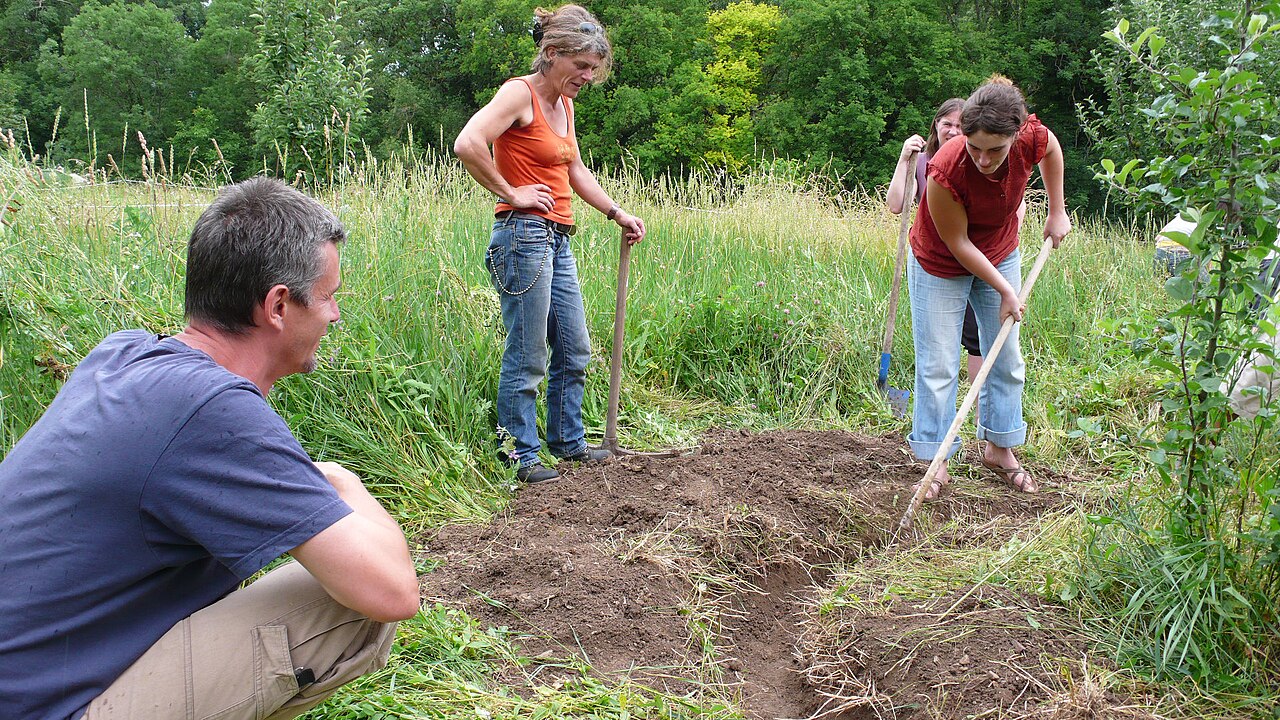
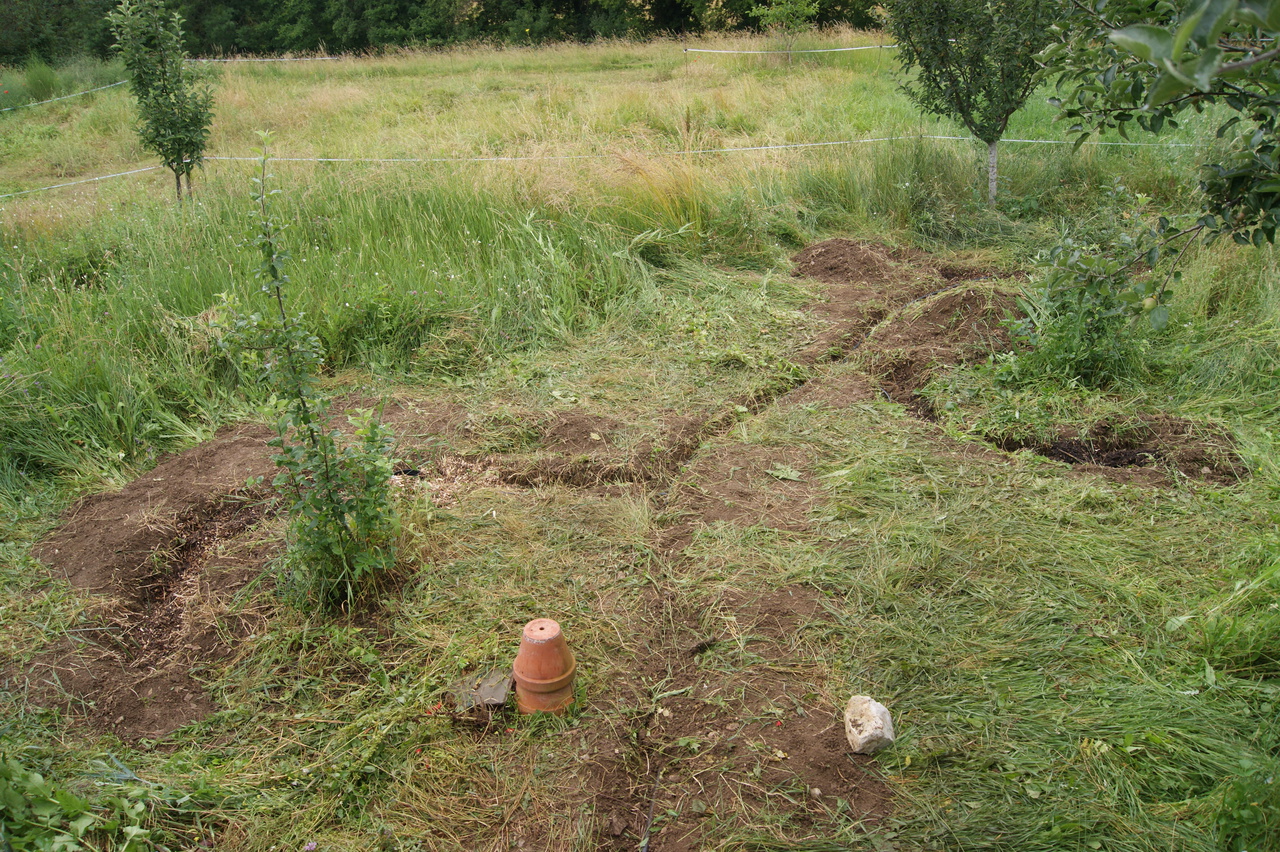
At each outlet, dig a basin 12 to 18 inches deep and about 2 feet wide. Set a mulch shield or open-ended pipe at the bottom. Fill with coarse wood chips. Water must infiltrate below the surface — no pooling visible above mulch.
Step 5: Test With Clean Water
Run a rinse cycle with the diverter set to "Garden." Check every basin for even distribution and surface pooling. Adjust ball valves until flow is balanced. Fix leaks before burying pipe.
Detergent and Soil Health Rules
Switch household products before relying on greywater:
- Use liquid laundry detergent low in sodium and free of boron
- Avoid chlorine bleach, fabric softeners, and synthetic fragrances
- Skip powder detergents — they leave salt residues that compact soil
- Alternate greywater irrigation with rainwater or municipal water every few weeks if soil tests show rising pH or salinity

Affiliate recommendation: Art Ludwig's reference book covers L2L design, code considerations, and branched drain systems in detail. Useful if your project goes beyond a single washer line.
Maintenance Checklist
- Refresh mulch in basins once or twice yearly
- Flush branch lines annually by running clean water through the system
- Inspect diverter valve operation monthly — it should switch smoothly
- Test soil pH yearly near discharge points
- Winterize exposed pipe in freezing climates or divert to sewer all winter
Common Mistakes
- Storing greywater in barrels: Creates odor and pathogen risk within 24 hours.
- Using drip emitters: Lint clogs them within weeks. Use open outlets into mulch.
- Surface spraying: Illegal in most codes and creates human contact risk.
- Ignoring permit requirements: An unpermitted system can affect home insurance and resale.
- Watering vegetables: Health codes restrict edible crop irrigation with greywater in most US jurisdictions.
Sources & further reading
- Greywater Action — “Greywater Reuse.” greywateraction.org
- Oregon Department of Environmental Quality — “Graywater — Water Quality Programs.” oregon.gov
- UC Master Gardener Program of Contra Costa County — “Use of Grey Water and Recycled Water for Irrigation.” ucanr.edu
- Ohio State University Extension, Ohioline — “Gray Water Recycling in Ohio” (AEX-GW1). ohioline.osu.edu
- Utah State University Extension — “Graywater Systems.” extension.usu.edu
Sources verified August 2026.
Frequently Asked Questions
Do I need a permit for a laundry-to-landscape system?
It depends on location. California exempts many compliant L2L systems; other states require permits. Contact your local building or health department before installing.
Can greywater water vegetable gardens?
Most codes prohibit greywater on root crops and leafy greens. Fruit trees and ornamental shrubs are standard targets. Check your local regulations.
What laundry detergent is safe for greywater?
Biocompatible liquids low in sodium and boron, without bleach. Powder detergents often damage soil structure over time.
Will greywater smell?
Not if designed correctly — subsurface discharge into mulch prevents odor. Pooling or stored water will smell within a day.
Can I use kitchen sink water?
Generally no for DIY systems. Kitchen waste is classified as blackwater in most codes due to grease and food particles.
Advertisement