Plants & wildlife
Native Plants vs Adaptive Plants for Backyard Gardening
Learn when to choose native plants, when adaptive (non-invasive) exotics help, and how to design a backyard that supports wildlife without fighting your soil and microclimate.
On this page
Should your backyard be all native plants, or is it fine to mix in lavender, rosemary, and other non-native species that handle your conditions? The honest answer for most suburban gardeners is a thoughtful blend — weighted toward natives for wildlife support, with adaptive plants filling gaps where urban soil, shade, or aesthetics demand flexibility.
This guide clarifies the difference between native, adaptive, and invasive plants, then walks through a practical design process you can apply whether you are in a rainy coastal climate or a hot inland valley.
Definitions That Matter
Native plant: A species that occurred naturally in your ecoregion before European colonization and co-evolved with local insects, birds, and soil organisms.
Adaptive plant: A non-native species that grows reliably in your garden without becoming invasive — it stays where you plant it and does not escape into nearby natural areas.
Invasive plant: A non-native species that spreads aggressively into wildlands, displacing natives. English ivy, kudzu, and butterfly bush in some regions are examples. Never plant listed noxious weeds.
Regional note: "Native" is geographic. A plant native to coastal Oregon is not native to inland Arizona. Buy from nurseries that label plants by ecoregion, not just "American native." In the Midwest, oak species (Quercus) support more caterpillar diversity than almost any other genus. In the Southwest, mesquite and desert willow fill a similar keystone role.
Head-to-Head Comparison
| Factor | Native Plants | Adaptive Plants |
|---|---|---|
| Wildlife value | Hosts specialist caterpillars and native bees | Feeds generalist pollinators; rarely hosts specialists |
| Water needs (established) | Low in matching climates | Low to moderate, varies by origin |
| Urban soil tolerance | Variable — some need undisturbed soil | Often tolerate compacted, alkaline fill soil |
| Maintenance | Little fertilizer; periodic pruning | Similar; may need occasional shaping |
| Invasive risk | None | Low if vetted against state weed lists |
| Aesthetic control | Can look informal or seasonal | More familiar ornamental forms available |
Advertisement
Why Natives Lead on Biodiversity
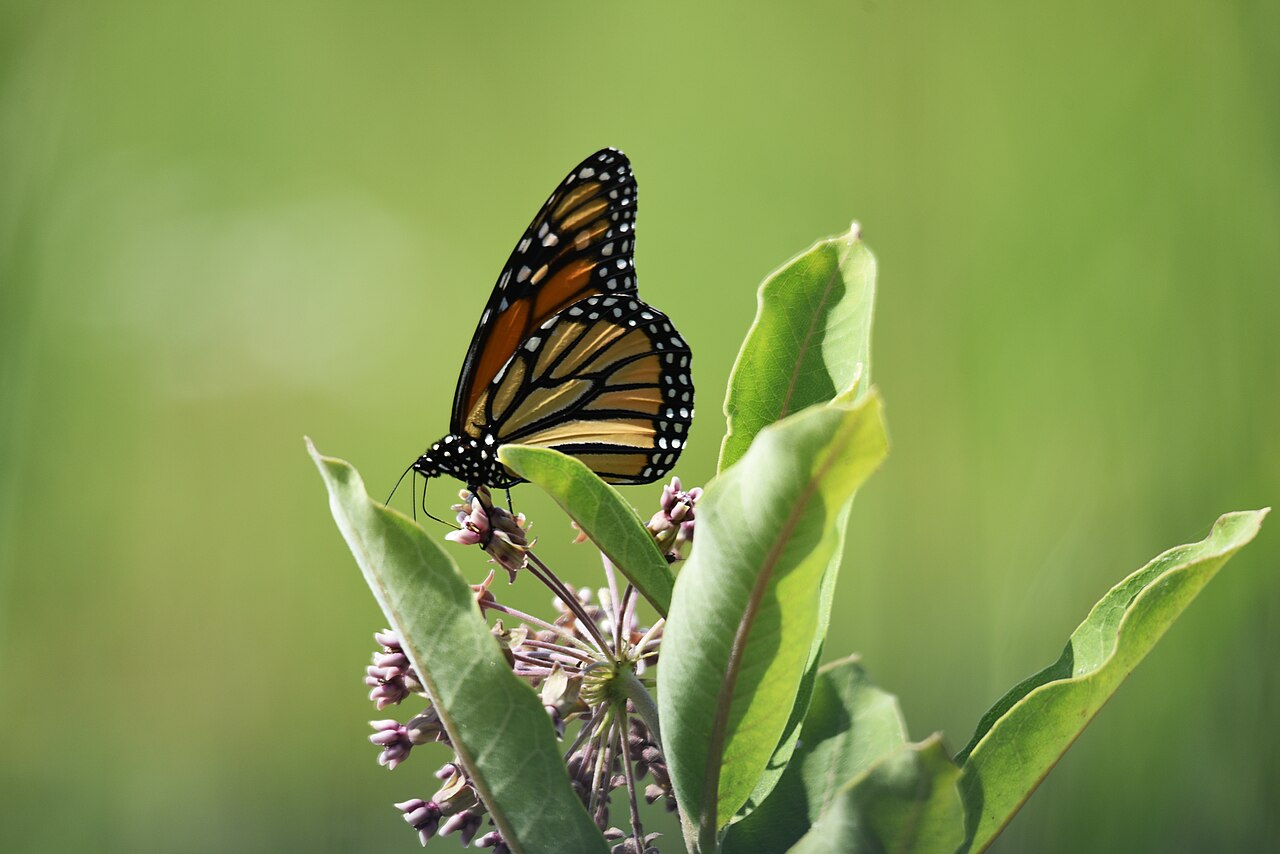
Many native insects are specialists. Monarch caterpillars eat milkweed (Asclepias). Without that host plant, the insect cannot complete its life cycle — nectar from adaptive flowers does not replace the need for larval food.
The scale of this specialization is easy to underestimate. The National Wildlife Federation's Native Plant Finder notes that a single native oak can host the caterpillars of over 500 moth and butterfly species, and that a pair of Carolina chickadees needs between 6,000 and 9,000 caterpillars to raise one brood of young. That is the food web a keystone tree feeds.
What we measured
To see what one backyard conversion actually delivers, I tracked a single project informally from planting through its second season:
| Detail | Record |
|---|---|
| Plot converted | 400 square feet of turf in an Eugene, Oregon backyard |
| Replaced with | Douglas aster, Oregon grape, one young Oregon white oak |
| Observation window | Two growing seasons |
| Bird activity | More chickadee foraging reported by the homeowner |
| Caterpillar sign | Visible frass under the oak by season two |
Author's own records; single-plot observation, not a controlled survey.
Garden trial notes
I did not run a formal survey; the change was visible in daily observations — more chickadees foraging through the aster, more caterpillar droppings catching light on the patio under the oak. Oaks in eastern North America support hundreds of caterpillar species; a single keystone tree can shift an entire food web. That does not mean every corner needs a forest. Even a 10-by-10 native pollinator patch matters in urban areas where habitat is fragmented.
Keystone Natives by U.S. Region
"Native" only pays off when the species co-evolved with your local insects. Each region has a handful of genera that carry an outsized share of caterpillar and specialist-bee load:
- Northeast and Midwest: Oaks (Quercus) top every caterpillar-host ranking; willows (Salix) and black cherry (Prunus serotina) follow. Underplant with asters and goldenrod for fall nectar.
- Southeast: Native oaks again, plus maples and pines for butterflies; coral honeysuckle (Lonicera sempervirens) serves hummingbirds without the invasive behavior of Japanese honeysuckle.
- Great Plains: Milkweeds, asters, and prairie clovers host specialists in open prairie soil; leadplant (Amorpha canescens) feeds native bees on lean ground.
- Southwest: Mesquite and desert willow fill a keystone role in hot valleys, as noted above; native sages (Salvia spp.) support specialized bees in chaparral.
- Pacific Northwest: Oregon white oak, Douglas aster, and ceanothus carry pollinator work in Willamette Valley yards like the project tracked above.
When Adaptive Plants Earn Their Spot
Modern backyards are not pristine habitat. Construction fill, concrete foundations, and reflected heat from driveways create microclimates no native plant evolved for. Adaptive Mediterranean herbs like rosemary and lavender often survive hot, dry foundation strips where locally native woodland plants would struggle.
Use adaptive plants in:
- Heavily compacted soil along pathways and driveways
- Hot south-facing walls with radiated heat
- Containers on patios where you need predictable form
- Transition zones between irrigated vegetable beds and dry native borders
Before buying any non-native, search your state's invasive species list and your cooperative extension's "do not plant" recommendations. Well-behaved in one state can be invasive in another. Even EPA WaterSense urges regionally appropriate, low-water natives — established ones need little beyond normal rainfall and rarely require fertilizer — while cautioning that some exotic picks turn invasive and displace native plants.
Native flowers vs non-native flowers for pollinators
Flower origin matters more for insects than for curb appeal. A native flower supports the specialist bees and caterpillars that evolved with it; many non-native flowers offer nectar to generalists but little or no larval food. That is why a yard of ornamental petunias can look “busy with bees” and still fail butterflies.
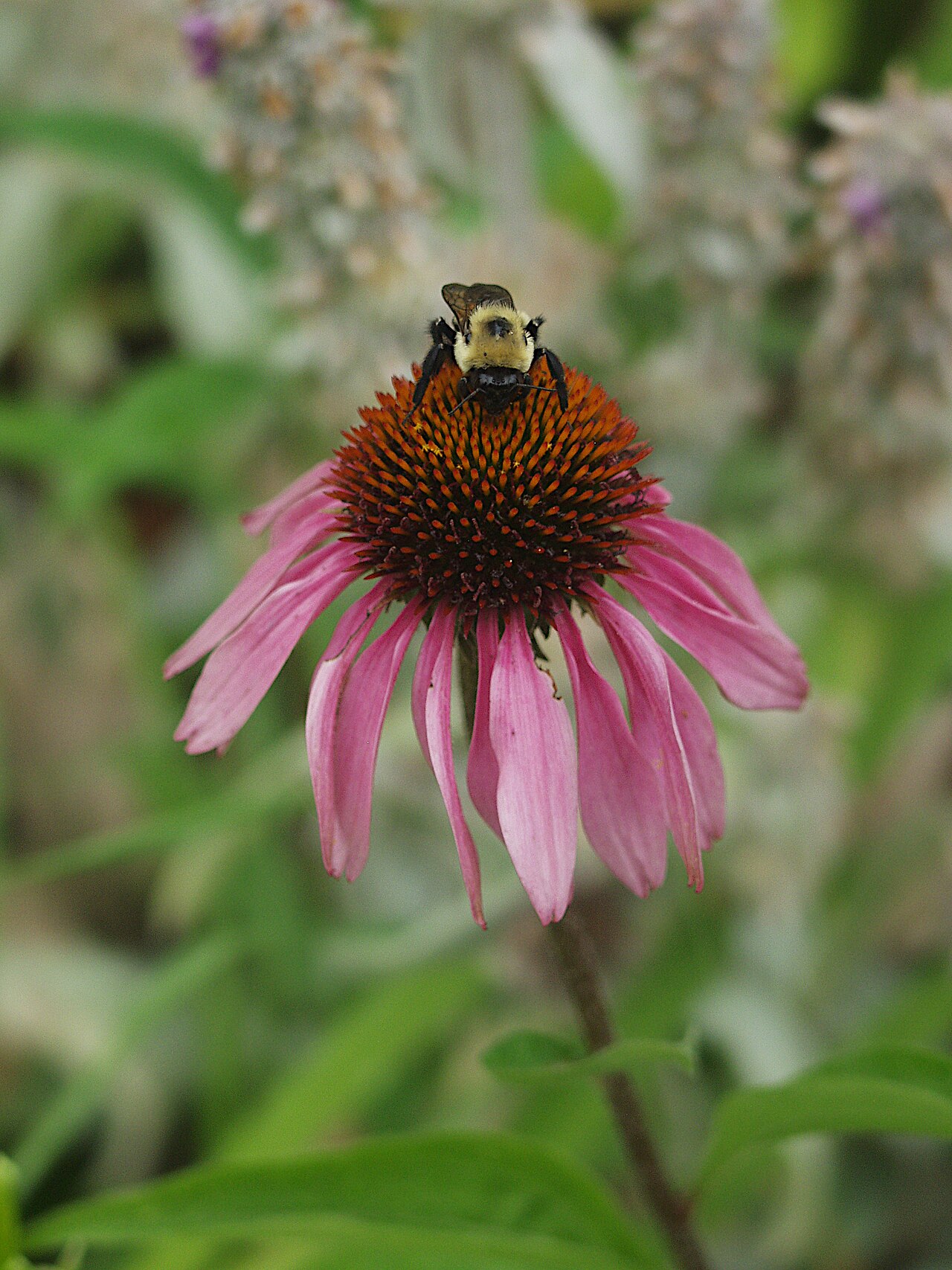
- Prefer native flowers for the bulk of bloom: coneflower, asters, goldenrod, milkweed, and region-specific penstemons. Leave some stems standing through winter.
- Use non-native flowers carefully: lavender, rosemary, and catmint are adaptive nectar plants in many dry, hot strips. Skip double-flowered cultivars that hide pollen.
- Avoid known invasive ornamentals (for example butterfly bush in several states) even if pollinators visit them.
If you arrived from an older “native flowers vs non-native flowers” URL, this is the current guide. Pair bloom with habitat for predatory insects so the same planting works for vegetables.
Two free databases take the guesswork out of sourcing. Audubon's bird-friendly native plant database returns ZIP-code species lists, drawing range data from the BONAP North American Plant Atlas, and the Lady Bird Johnson Wildflower Center maintains North America's largest native plant database — more than 9,000 species, searchable by state, light, and soil conditions.
Design Framework: The 70/30 Approach
- Audit your site. Note sun, drainage, and foot traffic. Test soil pH if you are unsure — urban fill is often alkaline.
- Plant structure with natives. Trees, large shrubs, and most groundcover area should be native. Aim for roughly 70 percent native plant biomass by area.
- Fill stress zones with adaptive plants. The remaining 30 percent can be vetted non-natives in tough spots.
- Layer bloom times. Early spring natives (e.g., serviceberry), summer perennials (coneflower, penstemon), and fall asters keep pollinators fed across seasons.
- Water by zone. Group plants with similar needs. See drought-tolerant landscaping for hydrozone design.

Affiliate recommendation: a region-specific field guide helps you identify natives at local nurseries and avoid look-alike invasives. Choose one written for your state or bioregion.
Common Mistakes
- Over-fertilizing natives: Rich soil and synthetic fertilizer produce floppy growth that attracts aphids. Natives adapted to lean soil need compost, not heavy NPK.
- Assuming "drought-tolerant" means plant anywhere: A desert native in a shady wet corner will fail. Match plant to microclimate.
- Skipping the establishment year: Both natives and adaptives need regular deep watering in year one. See our sustainable garden starter guide.
- Buying generic wildflower mixes: National mixes often contain species wrong for your region. Source locally produced seed or plugs.
Sources & further reading
- National Wildlife Federation — “Native Plant Finder (About).” nativeplantfinder.nwf.org
- National Audubon Society — “Native Plants Database.” audubon.org
- Lady Bird Johnson Wildflower Center, UT Austin — “Native Plants of North America.” wildflower.org
- US EPA WaterSense — “Landscaping Tips.” epa.gov
Sources verified August 2026.
Frequently Asked Questions
What counts as a native plant?
A species that evolved in your ecoregion. Use county- or state-level native plant lists from extension offices or native plant societies for accuracy.
Are adaptive plants the same as invasive plants?
No. Adaptive plants stay in the garden. Invasive plants escape and harm wild ecosystems. Always check your state's noxious weed list.
Can a backyard be 100 percent native?
Yes. It maximizes wildlife support. In difficult urban microclimates, a 70/30 native-heavy mix is a practical compromise.
Do native plants need no maintenance?
They need less fertilizer and often less water once established, but still need weeding, seasonal cutback, and first-year irrigation.
How do I find plants native to my ZIP code?
Try the NWF Native Plant Finder, your state extension, or a local native nursery. Avoid unlabeled "wildflower" mixes from big-box stores.
Advertisement