Soil & beds
Hugelkultur Raised Bed Construction Guide
Build a hugelkultur raised bed with the right wood, layer order, nitrogen balance, and planting timeline. Includes wood selection table and settling tips.
On this page
Hugelkultur (German for “mound culture”) buries logs and branches inside a raised bed so rotting wood acts as a sponge and slow-release nutrient source. Done well, it cuts the volume of purchased topsoil you need and can reduce summer watering once the bed matures.
Done poorly—fresh walnut wood, huge air gaps, no nitrogen layer—you get a sunken bed and yellow, stunted plants. This guide walks through wood selection, layer order, and realistic timelines for a framed 4-by-8-foot bed at least 20 inches tall.
Hugelkultur raised bed: a contained mound built with large wood at the base, smaller brush in gaps, nitrogen-rich material above the wood, and 6 to 8 inches of plantable soil on top.
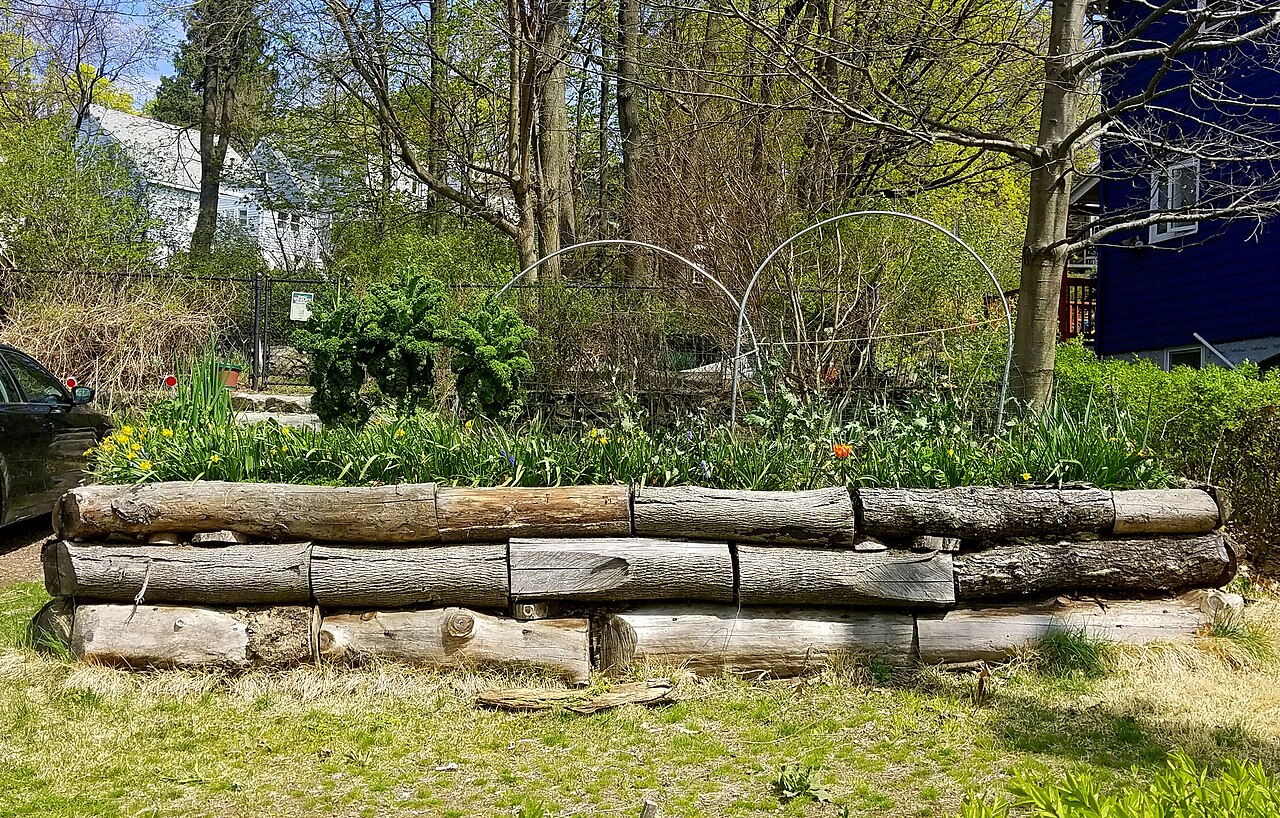
Why Build Hugelkultur Inside a Raised Frame?
Traditional hugel mounds are freestanding hills. In suburban yards, a cedar or metal frame:
- Defines paths and prevents wood from spilling into lawn
- Raises planting depth when native soil is rocky or compacted
- Looks intentional to neighbors and HOAs
The raised part of the equation earns its keep on its own, as WVU Extension sums up: improved soil drainage, warmer soil, easier access, less compaction, longer growing season, and higher yields in limited space. University of Maryland researchers add the tradeoff worth planning around—the looser, raised soil drains well but also dries out faster, so it needs closer monitoring and irrigation. A woody core is one way to offset exactly that weakness.
Wood Selection
| Wood type | Decomposition | Notes |
|---|---|---|
| Oak, maple, alder | Slow (10+ years) | Best long-term water reservoir |
| Aged pine, fir | Medium (5–7 years) | OK if not fresh-cut; mix with hardwoods |
| Black walnut | Slow | Avoid—juglone inhibits many plants |
| Cedar, redwood, locust | Very slow | Rot-resistant; poor hugel choice |
Use logs 4 to 8 inches in diameter for the base. Partially rotted “punk wood” is ideal—it already holds water.
Advertisement
Materials for a 4-by-8-by-24-Inch Bed
- Raised bed frame (cedar or untreated lumber), minimum 20 inches tall
- Logs: 0.5 to 1 cubic yard by volume when stacked
- Branches and twigs to fill gaps
- Nitrogen layer: 2 wheelbarrows grass clippings, manure, or kitchen scraps
- Topsoil + compost blend: 0.75 to 1 cubic yard for 6 to 8 inches of planting depth
Scaling Materials to Bed Size
The material quantities above assume a 4-by-8 frame at least 24 inches tall. Halve them for a 4-by-4 starter bed:
| Frame size | Logs (stacked volume) | Nitrogen layer | Soil + compost cap (6–8 in) |
|---|---|---|---|
| 4×4 ft | ~0.25–0.5 cu yd | 1 wheelbarrow | ~0.4 cu yd |
| 4×8 ft | 0.5–1 cu yd | 2 wheelbarrows | 0.75–1 cu yd |

A 48-by-96-inch cedar kit works for standard hugel dimensions if you choose a model at least 20 inches deep. You can also build from untreated 2×10 lumber for less cost.
Construction Steps
Step 1: Site and frame
Choose full sun (6+ hours). Level the ground roughly—perfection is unnecessary. Assemble the frame and confirm it is square.
Step 2: Optional shallow dig
Scoop out 6 to 12 inches of soil inside the frame and set it aside for the top layer. Digging lets you recess the largest logs and gain height without exceeding fence height limits.
Step 3: Pack the log base
Lay the thickest logs tightly along the bottom. Water them until dripping. Pack branches into gaps; stomp gently to reduce voids.
Step 4: Nitrogen blanket (2 to 3 inches)
Spread grass clippings, composted manure, or kitchen scraps over wood. This layer is not optional chemistry: NMSU Extension notes that fresh wood chips run roughly a 700:1 carbon-to-nitrogen ratio, so soil microbes decomposing high-carbon material immobilize nitrogen and plants can experience deficiency unless additional nitrogen is added. The green blanket feeds those microbes so they steal from it instead of from your crops.
Step 5: Soil cap (6 to 8 inches)
Mix reserved native soil with compost. This is where roots live for the first one to two seasons. Do not plant directly into raw wood.
Step 6: Water and wait (optional)
If built in autumn, let winter rain saturate the core. Spring builds can be planted immediately into the soil cap.
Year-One Planting Strategy
- Good first-year crops: squash, potatoes, beans, leafy greens—these tolerate settling and moderate nitrogen competition
- Wait until year two: carrots, onions, and other fine-root crops in the exact spot where large logs sit directly below
- Top off each spring: add 1 to 2 inches of compost as the bed settles 2 to 4 inches
What we observed on a 2022 test bed
I kept notes on this bed and a standard (wood-free) raised bed planted with the same crops nearby:
| Observation | Hugel bed | Standard raised bed |
|---|---|---|
| August watering for squash and cucumbers | Twice a week | Every other day |
| Tomatoes over a fresh oak log, year 1 | Light leaf-edge yellowing | Normal growth |
| Tomatoes, year 2 after compost top-up | Normal performance | Normal performance |
Author's own records; single-project observation, not a controlled trial.
The takeaway matched the theory: the wood core buffered summer drought, but year one belonged to tolerant crops while fresh wood, microbes, and vegetable roots negotiated over nitrogen.
Shaded logs and fungal breakdown
Hugelkultur works best where the log core stays damp. A north-facing fence, the shade of a garage, or the cool side of a hedge keeps wood from baking dry—the same conditions people look for when inoculating mushroom logs. You do not need a fruiting mushroom crop for the bed to function; decomposer fungi are doing the useful work as they hollow the logs and store water.
- Partially rotted hardwood (oak, maple, alder) in shade colonizes faster than fresh, sun-baked pine.
- If you already have inoculated mushroom logs, park spent logs in the hugel core after they stop fruiting rather than sending them to landfill. Do not mix treated lumber.
- Keep the soil cap at least 6 inches so vegetable roots are not sitting in raw fungal wood the first summer.
We redirected the old mushroom-on-logs article here because a shaded wood pile is a soil-building system first. If you only want vegetables, skip inoculation and let wild fungi move in.
Climate Notes Before You Build
- Hot-arid gardens: the biggest payoff—dry air is where a water-storing core shines. Shade the mound's west side and mulch heavily so the log mass stays damp enough to decompose.
- Rain-heavy climates: the opposite risk applies. Avoid recessing the bed below grade, keep the frame on a slight crown, and don't over-water an autumn build or the core can go anaerobic.
- Freeze-thaw regions: expect faster settling through winter as water works into gaps. Autumn builders should plan a spring top-dressing; spring builders should pack layers extra tight as they stack.
- Short seasons: the raised height warms earlier, which stretches spring—but the same insulation delays warm-up slightly versus bare tilled soil in cold climates, so pull back mulch a week or two before early sowings.
Common Mistakes
- Large air pockets: cause uneven settling and snapped roots. Pack gaps with small wood and water each layer.
- Skipping nitrogen above logs: wood steals nitrogen while decomposing; plants starve without a green layer. Oregon State Extension makes the same point for chips generally—mixing woody material into soil invites nitrogen tie-up, so keep wood buried under a nitrogen blanket or on the surface where worms work it in gradually.
- Too-shallow soil cap: less than 6 inches forces roots into raw wood too soon.
- Fresh aromatic softwood: can suppress growth for several weeks—age it first.
Sources & further reading
- New Mexico State University Extension — “Soil Biological Processes” (A153). pubs.nmsu.edu
- Oregon State University Extension Service — “Ask Extension: Wood chips for mulch?” extension.oregonstate.edu
- West Virginia University Extension — “Raised Bed Gardening.” extension.wvu.edu
- University of Maryland Extension — “Growing Vegetables in Raised Beds.” extension.umd.edu
Sources verified August 2026.
Frequently Asked Questions
How long will the bed last?
Often 10 to 15 years with hardwood cores, with gradual settling each season.
Is pine OK?
Yes if aged or partially rotted; avoid fresh-cut pine directly under hungry crops.
Why is it sinking?
Normal decomposition—top off with compost annually.
Termite risk?
Keep beds away from wooden structures; moist active beds favor decomposers over dry-wood pests.
Best build season?
Late autumn for winter saturation; spring works with thorough watering.
Advertisement