Soil & beds
Lasagna Gardening Method Step by Step
Build fertile no-dig beds with the lasagna gardening method: cardboard base, brown and green layers, watering schedule, and planting timelines.
On this page
Lasagna gardening—also called sheet mulching or sheet composting—lets you build fertile soil on top of lawn, weeds, or hard-packed dirt without renting a tiller. You stack carbon-rich “brown” materials and nitrogen-rich “green” materials in alternating layers, much like building a compost pile flat on the ground.
This method suits anyone converting turf to vegetables, expanding an existing bed, or improving clay soil from the top down. The materials are often free: cardboard, leaves, grass clippings, and kitchen scraps.
What Is Lasagna Gardening?
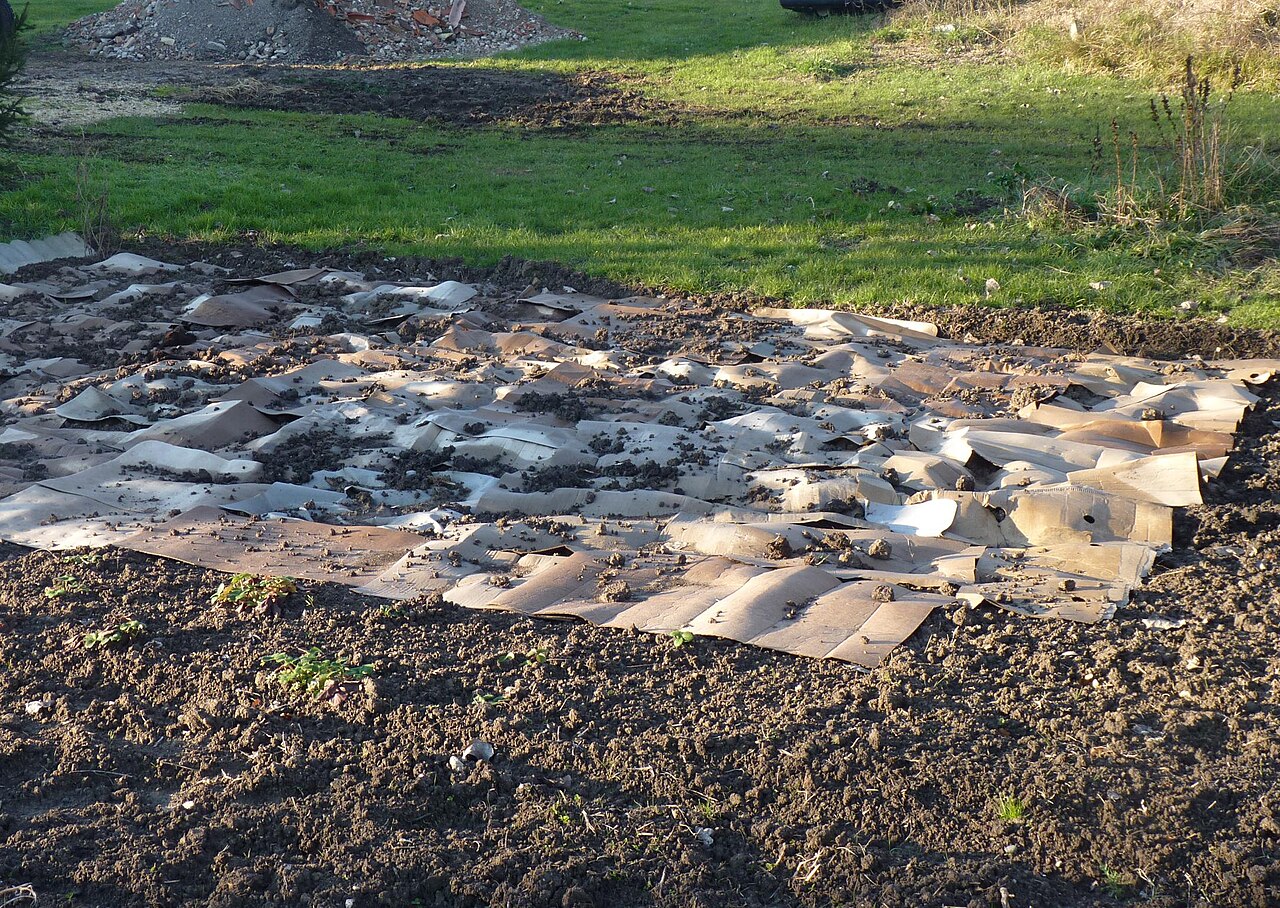
Lasagna gardening is a no-dig technique where organic layers decompose in place to create topsoil. The cardboard base blocks light to existing weeds; earthworms and microbes do the incorporation work for you.
You are in good company building soil this way: even the EPA describes starting a compost pile "like lasagna," with a four- to six-inch base layer of bulky browns such as twigs and wood chips that absorbs extra liquid and lets air circulate underneath. The same logic scales up when you lay it flat on the ground instead of heaping it in a bin.
Materials for a 4-by-8-Foot Bed
- Cardboard: enough to cover 32 sq ft twice (overlap generously)
- Browns: 8 to 12 wheelbarrows of dry leaves, straw, or shredded paper
- Greens: 4 to 6 wheelbarrows of grass clippings, kitchen scraps, or fresh garden waste
- Finished compost: 1 wheelbarrow for the planting cap
- Water hose with spray nozzle
Build log: a $40 community plot bed
When I built a community plot bed last October, almost every material came from waste streams within two blocks. What the project actually cost:
| Material | Source | Cash cost |
|---|---|---|
| Cardboard, tape removed (2 passes over the bed) | Bike shop boxes | $0 |
| Dry leaves for browns | A neighbor's curbside pile | $0 |
| Grass clippings and kitchen scraps for greens | On site | $0 |
| Delivered finished compost, ~2 yards (planting cap) | Local supplier | ~$40 |
Author's own records; single-project observation, not a controlled trial.
Scaling the recipe to other bed sizes
The quantities above assume 32 square feet. Scale roughly by area—half for a 4-by-4 starter patch, double for a 4-by-16 strip:
| Bed size | Browns | Greens | Compost cap |
|---|---|---|---|
| 4×4 ft (16 sq ft) | 4–6 wheelbarrows | 2–3 wheelbarrows | ½ wheelbarrow |
| 4×8 ft (32 sq ft) | 8–12 wheelbarrows | 4–6 wheelbarrows | 1 wheelbarrow |
| 4×16 ft (64 sq ft) | 16–24 wheelbarrows | 8–12 wheelbarrows | 2 wheelbarrows |
Brown vs. Green Layers
| Browns (carbon) | Greens (nitrogen) |
|---|---|
| Dry leaves, straw, shredded cardboard | Fresh grass clippings, coffee grounds |
| Pine needles (in moderation) | Vegetable scraps, spent plants |
| Shredded newspaper (black ink only) | Herbivore manure (aged preferred) |
Target a 2:1 brown-to-green ratio by volume. If the pile smells like ammonia, add more browns. If it is dry and not heating, add greens and water.
Advertisement
Step-by-Step Build (About 3 Hours)
Step 1: Scalp the surface
Mow or weed-whack existing vegetation to the ground. Leave clippings—they count as a green layer.
Step 2: Lay and soak cardboard
Remove plastic tape and staples. Overlap sheets by at least 6 inches. Water until cardboard is saturated—roughly 5 gallons per 32 sq ft in dry weather.
Step 3: First green layer (2 inches)
Spread grass clippings or kitchen scraps evenly. This sits directly on wet cardboard where worms will find it first.
Step 4: First brown layer (4 inches)
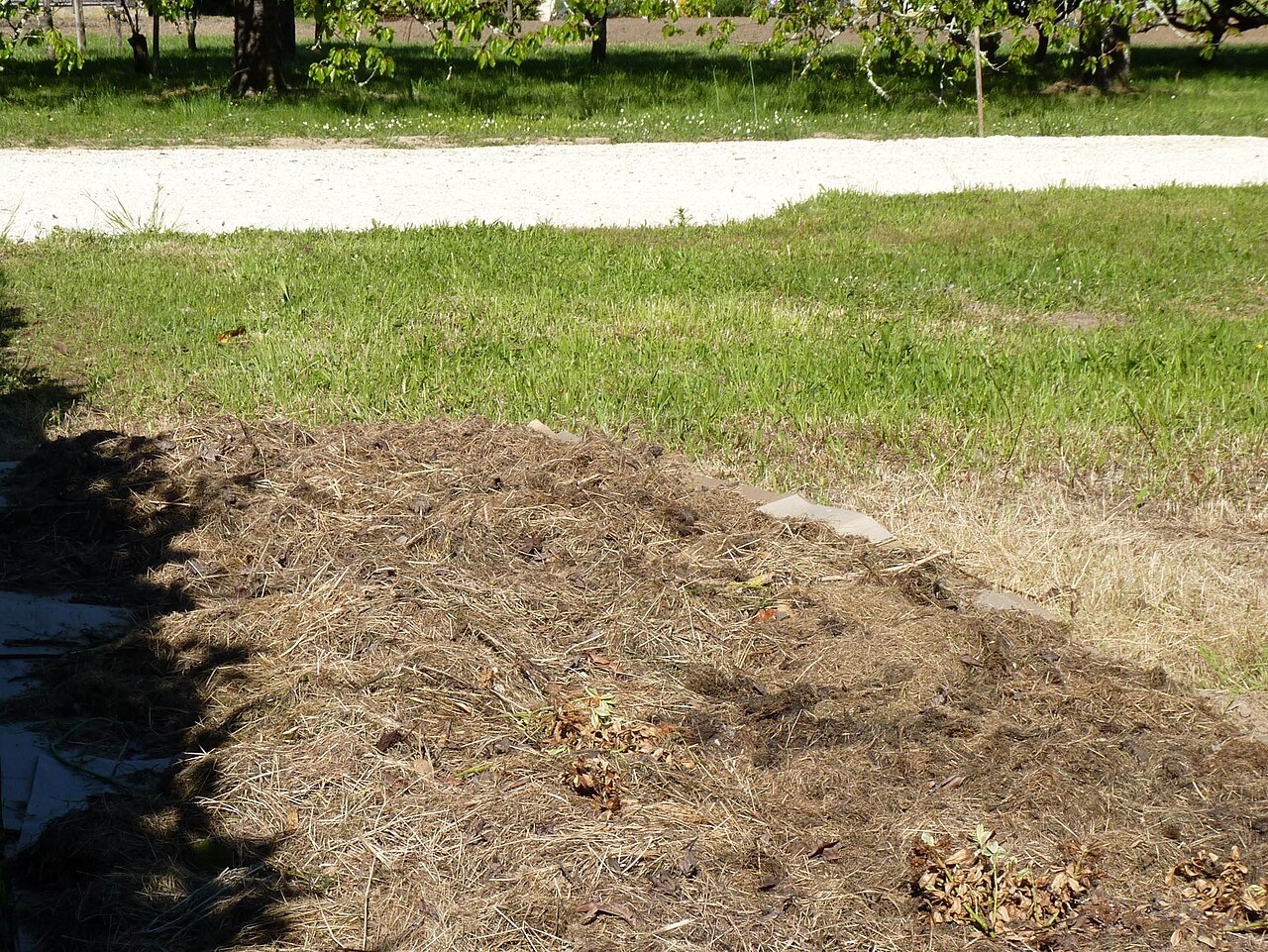
Add dry leaves or straw. Water until damp, not dripping.
Step 5: Repeat layers
Alternate 2-inch green and 4-inch brown layers until the pile is 18 to 24 inches tall. It will settle to roughly one-third of that height within a few months.
Step 6: Cap with compost (2 inches)
Finish with finished compost or quality topsoil. This is your planting surface. Avoid unfinished manure on the top layer—it can burn seedlings.
When to Build and When to Plant
Extension services on both coasts converge on the same schedule. NC State Extension treats "lasagna gardening" and sheet mulching as the same thing—layered greens and browns built 1½ to 3 feet high—and notes that if you sheet mulch in November, you will be ready to plant in May. Oregon State Extension's recipe adds the details that matter: overlap cardboard edges by at least 8 inches, keep alternating green and brown layers up to 18 inches or taller, sprinkle in a few handfuls of soil between layers for microorganisms, and expect the new bed to be ready for planting in approximately six months.
What the first six months look like
| Stage | Timing | What you see |
|---|---|---|
| Build day | About 3 hours of work | Stack stands 18–24 inches tall |
| Settling | First few months | Height drops roughly one-third; UF/IFAS calls this a "cold" process—it simply takes time |
| Cardboard softening | 2–4 months with moisture | Sheets tear easily; roots push through seams |
| Bed plantable | About 6 months after building | No distinguishable cardboard pieces 6 inches down; earthy smell, not sour |
Author's own records; single-project observation, not a controlled trial.
- Best timing: autumn, so winter moisture breaks layers down for spring planting
- Spring build: plant into the compost cap immediately; roots will reach decomposing layers by midsummer
- Signs the bed is ready: you cannot distinguish individual cardboard pieces 6 inches down; soil smells earthy, not sour
In a side-by-side trial on my own plot, the autumn-built bed needed 40% less supplemental water the following July than a spring-tilled plot of the same size—mostly because the mulch cap held moisture.
Regional Timing Notes
The autumn-build rule bends by region. In cold-winter climates, build as soon as the ground thaws instead—you want the full warm season for decomposition before freeze-up returns. In the humid Southeast, layers break down remarkably fast in summer heat and rain, so even a spring build can be plantable by late summer if you keep it watered. In arid regions, plan to irrigate the stack through its curing period; a dry lasagna bed is a paused lasagna bed. Mediterranean climates are the easiest case: build at the fall rains and let winter do the work, exactly the November-to-May rhythm NC State describes.
Deep Mulch for Soil Moisture
Once the lasagna stack has settled, treat the top as a deep-mulch system rather than a decorative chip layer. The goal is a continuous 3-to-4-inch blanket that shades soil, slows evaporation, and feeds fungi—without burying plant crowns.
- After planting: pull mulch 2 inches back from stems. Vegetable seedlings rot if chips sit against wet tissue.
- Paths vs beds: use coarser arborist chips on paths (4 inches) and finer leaf mold or straw on beds (3 inches).
- Summer check: if soil 4 inches down is dusty, water slowly, then restore the mulch. Do not add a sixth inch of chips on already-wet clay—that traps anaerobic pockets.
- Refresh: top up in late autumn when leaves are free. A lasagna bed that loses mulch in wind or to hungry birds will dry out as fast as bare soil.
Deep mulch is why we retired the old standalone “soil moisture with mulch” URL and folded that advice here. Sheet mulch builds the soil; the cap is how you keep moisture in July. For drought-tolerant plantings that are not vegetable beds, use the same depth with hydrozoned irrigation.
Common Mistakes
- Waxy or plastic-coated cardboard: repels water and persists for years. Use plain corrugated board.
- Skipping water between layers: dry pockets stall decomposition for months.
- Large unchopped branches: use wood no thicker than 2 inches unless you are building hugelkultur.
- Walking on the bed: compacts air spaces. Work from the sides only.
Failure modes and fixes
| Symptom | Likely cause | Fix |
|---|---|---|
| Layers unchanged after 3+ months | Dry pockets or oversized woody pieces | Soak the stack deeply; chop future materials finer before adding |
| Ammonia smell | Too many greens at once | Fork in a thick brown layer and water lightly |
| Weeds sprouting through the cap | Cardboard seams left open at edges | Tuck overlapping cardboard patches over gaps, then re-cover with compost |
| Slugs clustering under cardboard edges | Cool, damp daytime refuge | Press edges tightly to the soil and check undersides before planting |
Author's own records; single-project observation, not a controlled trial.
Lasagna vs. Tilling
| Lasagna / sheet mulch | Rototilling | |
|---|---|---|
| Weed seeds | Smothered, not stirred up | Brought to surface to germinate |
| Soil fungi | Left intact below cardboard | Disrupted mechanically |
| Labor | Stacking and hauling organic matter | Machine rental or heavy digging |
| Cost | Low if materials are local | Fuel, rental, possible amendments |
Sources & further reading
- U.S. Environmental Protection Agency — “Composting At Home.” epa.gov
- Oregon State University Extension Service — “Sheet mulching and lasagna composting with cardboard” (EM 9559). extension.oregonstate.edu
- NC State Extension, Extension Gardener — “Smart Gardening: Sheet mulching.” extensiongardener.ces.ncsu.edu
- UF/IFAS Extension — “No-Dig Garden Beds.” sfyl.ifas.ufl.edu
Sources verified August 2026.
Frequently Asked Questions
How long until layers break down?
Typically 4 to 6 months with consistent moisture. Autumn builds are often ready by spring.
Can I plant right away?
Yes—use a compost cap as your planting medium and let roots grow downward.
Must I remove grass?
No. Mow low and smother with cardboard.
What ratio of browns to greens?
About 2:1 by volume.
Are pine needles OK?
Yes, as part of brown layers in moderation.
Advertisement