Soil & beds
No-Dig Gardening vs Tilling: Pros and Cons
Compare no-dig gardening and tilling on soil health, weeds, water use, and labor. Includes a step-by-step transition plan and when tilling still makes sense.
On this page
Every spring, gardeners rent rototillers because freshly tilled soil looks fluffy and ready to plant. By midsummer, many of those same beds are crusted, weedy, and thirsty. No-dig gardening takes the opposite approach: add compost and mulch on the surface and let soil organisms incorporate it.
I ran a two-bed trial on my own property—one tilled each April, one converted to no-dig with cardboard and compost—to see whether the differences showed up in ordinary record-keeping, not just in lab terms.
What we measured
| Measure (first no-dig season) | No-dig bed | Tilled bed |
|---|---|---|
| July watering interval | About every 5 days | About every 3 days |
| Weekly weeding time by August | Under 20 minutes | About 90 minutes |
Author's own records; single-project observation, not a controlled trial.
Definitions
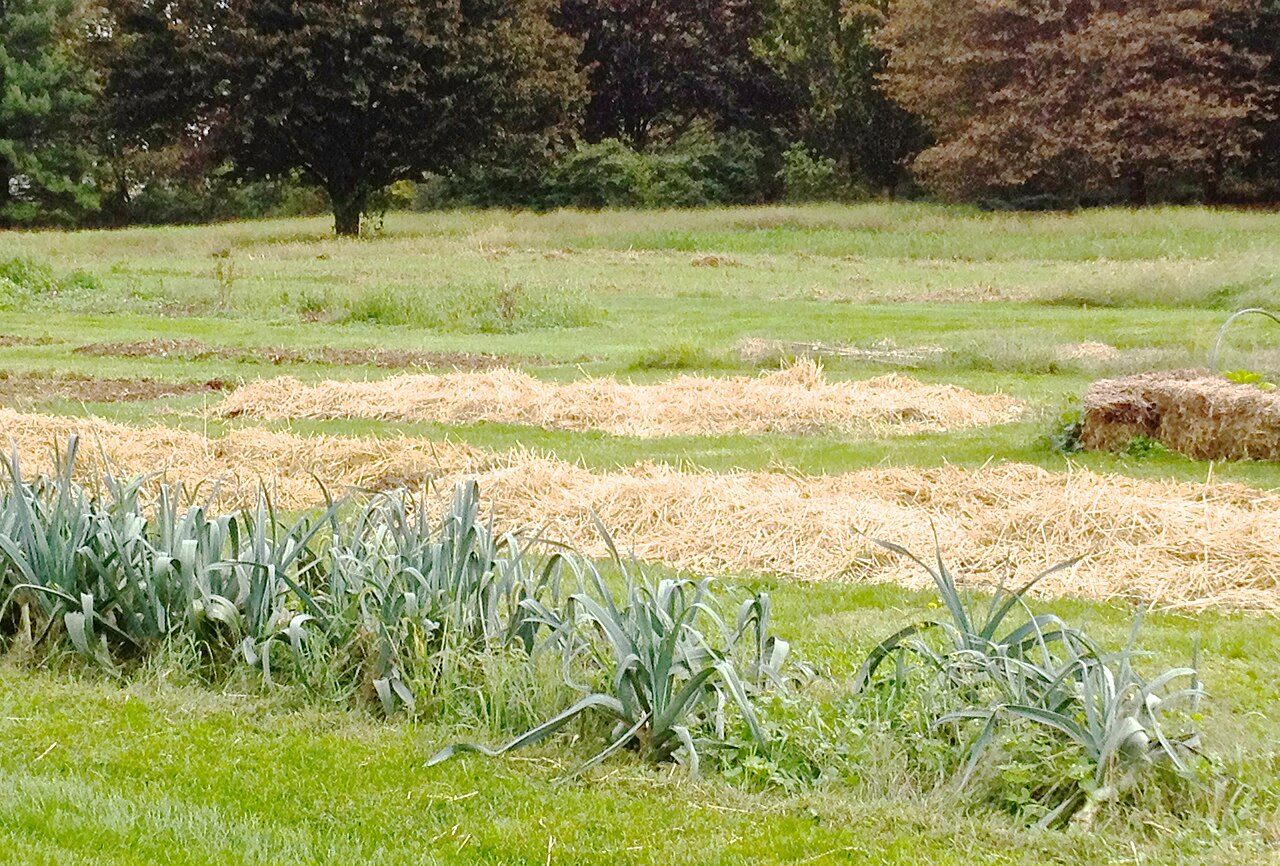
No-dig gardening (popularized by growers like Charles Dowding) means leaving soil structure intact. You smother weeds with cardboard, add 4 to 6 inches of compost, and plant into that layer. Ongoing maintenance is top-dressing compost and mulch—no mechanical turning.
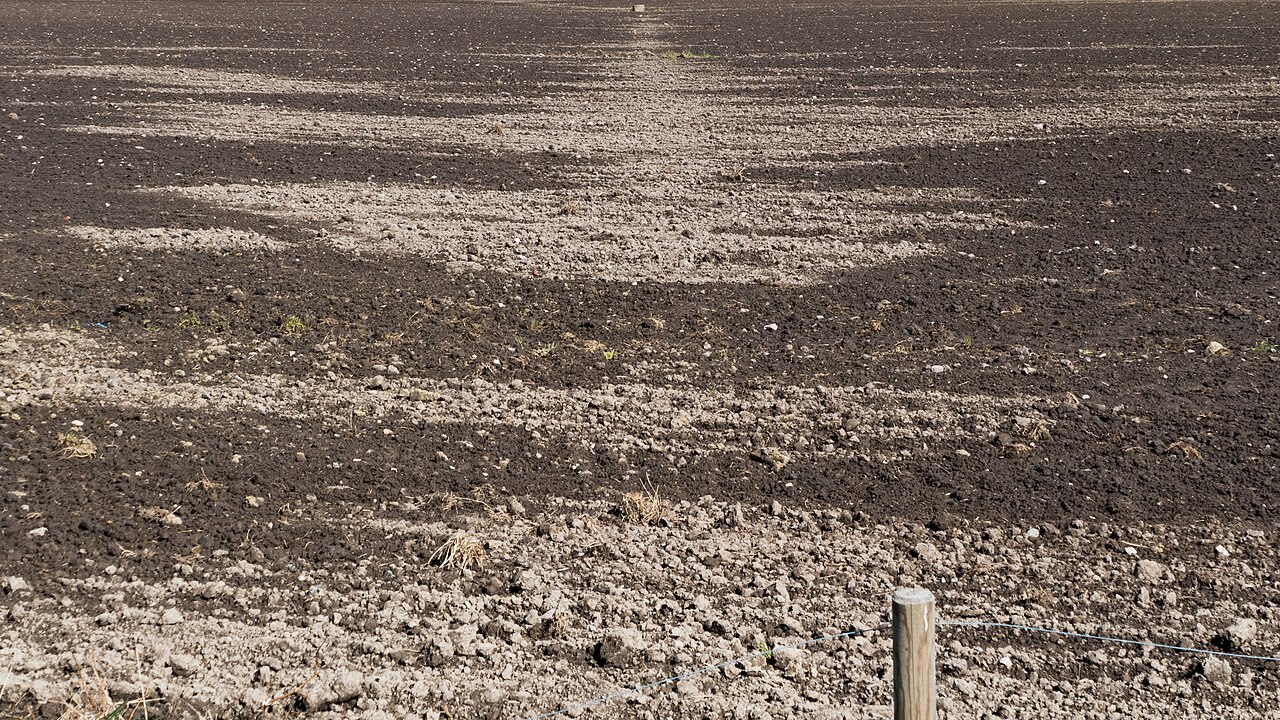
Tilling uses a rototiller or shovel to churn the top 6 to 10 inches. It aerates temporarily and buries surface weeds, but also disturbs fungal networks and brings dormant weed seeds to the surface.
Extension services increasingly frame no-dig the way UF/IFAS does: as backyard-scale no-till gardening—part of conservation tillage, which preserves soil integrity by minimizing erosion and maintaining organic matter while keeping buried weed seeds too deep to germinate.
Pros and Cons of Tilling
When tilling helps (short term)
- Breaks up a one-time hardpan if followed by permanent mulch and no further tillage
- Mixes lime or sulfur into the root zone quickly when a soil test shows a major pH correction is needed
- Clears a thick mat of dead vegetation before a cover crop on vacant land
Long-term drawbacks
- Weed seed bank: each pass exposes buried seeds to light
- Erosion: bare tilled soil washes and blows more easily
- Compaction layer: repeated tilling can create a hard pan just below the blade depth
- Carbon loss: disturbed aggregates expose organic matter to faster oxidation
This is not fringe theory. USDA's NRCS lists "minimize disturbance" among its four soil-health principles and warns that tillage can destroy soil organic matter and structure, disrupts the soil's natural biological cycles, reduces water infiltration, increases runoff, and makes soil more susceptible to erosion—especially during warmer months.
Advertisement
Pros and Cons of No-Dig
Advantages
- Preserves mycorrhizal fungi that extend root reach for water and phosphorus
- Mulched surface reduces evaporation—you water less often once beds mature
- Fewer weeds after the first year because seeds stay buried
- Less back strain: no wrestling with a tiller each spring
University of Maryland's raised-bed guidance puts it plainly: aim for a no-dig or low-dig bed, because the greater the soil disturbance, the more dormant weed seeds get hauled to the surface where they can germinate.
Tradeoffs
- Upfront compost: a 4-by-8 bed may need 0.75 to 1 cubic yard of compost the first year
- Slower spring warm-up: insulated mulch can delay planting by a week or two in cold climates
- Learning curve: planting into deep mulch takes practice for small seeds
Side-by-Side Comparison
| Factor | No-dig | Annual tilling |
|---|---|---|
| Soil structure | Improves over time | Often degrades without heavy organic inputs |
| Weed pressure | Low after year one | Typically high each spring |
| Water retention | Strong with mulch | Weaker; surface dries quickly |
| Initial cost | Compost purchase or production | Tiller rental or purchase |
| Earthworm activity | Usually increases | Often decreases with repeated passes |
How to Convert One Bed to No-Dig (This Weekend)
- Scalp vegetation with a mower or string trimmer; leave clippings in place.
- Lay cardboard with 6-inch overlaps; soak thoroughly (about 1 gallon per 4 sq ft).
- Add 4 to 6 inches of compost on top—this is your growing medium.
- Mulch paths with wood chips; keep compost surface bare only where you sow seeds.
- Plant immediately into the compost layer. Roots will penetrate cardboard as it softens.
For a layered alternative using free yard waste, see our lasagna gardening guide.
Transition timeline
| When | What happens |
|---|---|
| Weekend one | Scalp, lay cardboard and compost, plant first crops |
| Months 1–3 | Cardboard softens as roots push through seams |
| Months 3–6 | Cardboard typically gone in moist, biologically active soil |
| End of year one | Layered organic matter settles to roughly half its starting height |
| Year two onward | An annual compost top-dressing replaces digging entirely |
OSU Extension describes exactly this dynamic for sod-covered beds: flip the grass upside down in place beneath layered organic matter, and the decomposing sod feeds nitrogen and organic matter back into the new bed while the stack settles by about half over the first year. Finish your sheet mulch in fall and the bed is ready for spring planting.
When You Still Need a Fork—not a Tiller
On severely compacted sites, a broadfork loosens soil by lifting without inverting layers. Insert tines fully, rock back slightly, and repeat every 8 to 12 inches. One pass in year one is often enough before switching to compost top-dressing.

A sturdy broadfork for one-time aeration on compacted beds before switching to no-dig maintenance. Match handle height to your own; I use a 48-inch model on clay soil.
Pitfalls on Both Sides
- No-dig: glossy cardboard, plastic tape left on, or herbicide-contaminated compost can harm plants. Source clean materials.
- Tilling: never till wet clay—it sets into brick-like clods. Wait until soil crumbles in your hand.
- Both: skipping soil tests leads to over-fertilizing. Test every 2 to 3 years.
Regional and Climate Caveats
- Cold climates: mulch insulates both ways—no-dig soil warms up later in spring, which can push planting back a week or two. Pull mulch off beds early or use black compost as the top layer where you want earlier sowing.
- Hot, dry climates: no-dig shines; thicker mulch is your friend. Keep an eye on drip lines under mulch and water deeply but less often.
- Wet winters: untilled ground with living cover or mulch absorbs rain better than bare beds, but avoid walking on saturated no-dig soil—you will compact it just as effectively as any tiller would.
- Heavy clay: resist the urge to till clay "just once." Top-dressed clay opens up gradually from the surface down as worms and roots do the mixing.
Which Should You Choose?
For home-scale vegetable and flower beds, no-dig usually wins on maintenance, water, and soil biology after the first setup season. Tilling may still make sense for a one-time site prep on raw land, or when you need to deeply incorporate a large pH correction.
Try converting a single 4-by-8 bed and compare it to your usual method for one year. The difference in weeding alone may settle the question.
Sources & further reading
- USDA Natural Resources Conservation Service — “Soil Health.” nrcs.usda.gov
- UF/IFAS Extension — “No-Dig Garden Beds.” sfyl.ifas.ufl.edu
- University of Maryland Extension — “Growing Vegetables in Raised Beds.” extension.umd.edu
- Oregon State University Extension Service — “Three methods for no-turn cold composting” (EM 9480). extension.oregonstate.edu
Sources verified August 2026.
Frequently Asked Questions
Does no-dig work on clay?
Yes—compost layers and mulch encourage gradual improvement without destroying structure.
How do I sow carrots in mulch?
Clear a narrow strip to bare compost, sow shallowly, and keep evenly moist.
Does tilling kill worms?
It injures worms and destroys burrows; populations recover when tillage stops.
Cardboard breakdown time?
Typically 3 to 6 months in a moist, active bed.
No-till vs no-dig?
Same philosophy, different scale—tractors vs hand compost mulches.
Advertisement